Fishing heavily pressured rivers is one of the toughest challenges in modern fly fishing. Trout that see constant presentations quickly become selective, cautious, and far less forgiving. What worked on opening day often stops working entirely just a few weeks later. This is where competition fly fishing tactics separate average days from consistently productive ones.
Developed in high-pressure, time-limited environments, competition methods are built on efficiency, precision, and adaptability. Every cast has a purpose. Every drift is evaluated. Every adjustment is intentional. There is no reliance on luck—only repeatable systems that maximize opportunity.

The real advantage is that these methods are not limited to competitive anglers. When applied to public water, competition fly fishing tactics allow you to outthink pressured fish, reduce wasted effort, and dramatically improve your catch rate—even in rivers that seem picked apart.
If you already understand contact nymphing techniques, this is the next level: refining how you approach water, manage time, and adapt in real time.
What Competition Anglers Prioritize
At its core, competition fly fishing tactics revolve around efficiency. In a competition setting, anglers are given a fixed amount of time to catch as many fish as possible. There is no room for trial-and-error fishing or wandering without purpose. Every action must produce value.
This mindset changes how water is approached. Instead of covering long distances, competition anglers focus on extracting fish from high-percentage water as quickly as possible. They don’t fish everything—they fish what matters.
One of the most noticeable differences is how little time is spent with the fly out of the water. False casting is minimized. Adjustments are quick and deliberate. Flies are constantly drifting, which increases the number of opportunities for a fish to eat.

This approach is heavily influenced by formats such as FIPS-Mouche competitions, where success is measured by consistency over time. The anglers who win are not those who get lucky—they are the ones who repeat effective drifts over and over again.
Another key priority is control. Every drift is designed to be predictable. If something goes wrong—drag, poor depth, or missed contact—it is corrected immediately. There is no guesswork, only refinement.
Over time, this creates a feedback loop. Each drift provides information, and each adjustment improves the next one. This is the foundation of advanced euro nymphing and why it performs so well on pressured water.
Before you can fish competition-style drifts effectively, it helps to understand the core tight line nymphing techniques that improve contact, control, and strike detection in mixed currents.
Reading and Adapting to Pressured Water
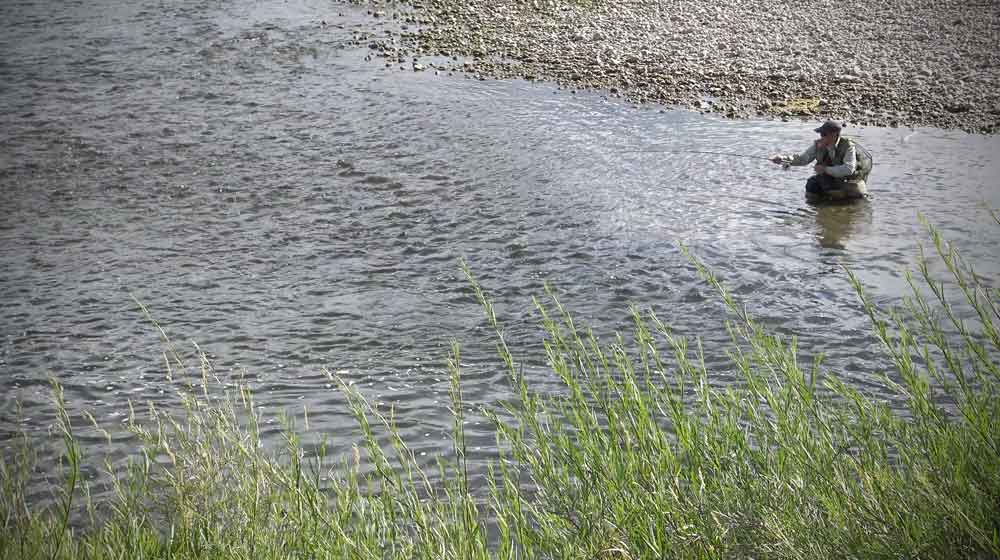
Fishing in public water requires a different level of awareness. Trout in these systems are not naive. They have seen countless flies, felt tension from poor drifts, and learned to avoid anything that feels unnatural.
Applying competition fly fishing tactics begins before you even make a cast. Observation becomes your first tool.
Take time to read the water carefully. Look for subtle clues rather than obvious ones. In heavily fished rivers, trout often avoid classic textbook holding water because it receives the most pressure. Instead, they shift into less obvious areas where they can feed with reduced risk.

These same river reading strategies become especially valuable when trout slide out of obvious holding water and start using subtle seams, edges, and softer current lanes.
These locations might include shallow edges, slight depressions, or seams that appear insignificant at first glance. What matters is not how the water looks to you, but how it functions for the fish. Trout want efficiency—places where they can hold with minimal effort and still intercept food.
Stealth also becomes critical. Movement, noise, and even your silhouette can affect fish behavior. A careless approach can shut down a run before your first drift. Competition anglers counter this by staying low, approaching from downstream when possible, and making their first casts count.
In pressured water, the first few presentations are often the most important. Fish that have not been disturbed are more willing to eat. Once they sense danger, the window narrows quickly.
This is why efficiency and awareness go hand in hand. You are not just fishing—you are managing opportunity.
Drift Efficiency and Zone Management
One of the most defining elements of competition fly fishing tactics is how anglers break down water. Instead of viewing a river as one continuous stretch, they divide it into small, manageable zones.
Each zone represents a high-probability feeding lane. Rather than casting randomly, anglers focus on one section at a time and fish it thoroughly before moving on.
This is where the concept of controlled repetition comes in. Instead of endlessly casting into the same spot, competition anglers rely on a limited number of high-quality drifts. Each drift is purposeful, and each one builds on the last.

The first drift establishes a baseline. It shows how the flies move through the water and whether fish respond. The second drift refines the presentation—adjusting depth, angle, or speed. The third drift confirms whether the zone is worth continuing or if it’s time to move.
This structured approach prevents wasted time. It also keeps you mentally engaged, constantly evaluating and improving your presentation.
Short-range drifts play a major role in this system. By keeping your casts within a controlled distance, you maintain better contact and reduce variables like drag and slack. This is especially important in advanced euro nymphing, where precision matters more than distance.
Zone management transforms how you fish. Instead of guessing where fish might be, you methodically cover water and build a clear picture of where they are holding.

Tactical Fly Rotation and Adjustment
In pressured water, fly selection is rarely static. One of the hallmarks of competition fly fishing tactics is the ability to adjust quickly without disrupting your rhythm.
Rather than sticking with a single pattern and hoping it works, competition anglers treat fly selection as part of an ongoing process. Each drift provides feedback, and that feedback guides the next adjustment.
Often, the first adjustment is not the fly itself but the depth. Many missed opportunities come from being slightly too high or too low in the water column. A small change in weight or leader angle can make an immediate difference.
When fly changes are necessary, they are deliberate. Instead of switching randomly, anglers make small, logical adjustments—changing size, color, or profile based on conditions. This keeps the process efficient and prevents unnecessary trial and error.
Rotation is also influenced by fish behavior. If trout show interest but refuse, it may indicate that your presentation is close but not quite right. Subtle changes often produce better results than drastic ones.
Efficient systems, such as pre-tied rigs or tagging setups, make these adjustments faster. The less time you spend re-rigging, the more time your flies spend in the water.
Over time, this approach builds confidence. You are no longer guessing—you are refining.

Applying Competition Lessons to Everyday Angling
You don’t need to fish competitively to benefit from competition fly fishing tactics. In fact, these methods are often even more valuable on public water, where pressure is high and opportunities are limited.
The biggest change is in mindset. Instead of fishing passively, you begin fishing with intention. Every decision has a purpose, and every drift is part of a larger strategy.
This leads to greater efficiency. You spend less time casting blindly and more time presenting your flies effectively. You move less, disturb the water less, and focus on the areas that matter most.
Another benefit is increased awareness. As you adopt competition-style thinking, you become more attuned to subtle details—current changes, fish positioning, and drift quality. These small observations add up quickly and improve your overall performance.
Even familiar rivers begin to feel different. Water you once overlooked becomes productive when approached with a refined system. Small seams, edges, and pockets reveal their potential.
Combined with strong contact nymphing techniques, these lessons create a powerful approach that works across a wide range of conditions.

Building a System for Pressurized Water Success
Consistency in competition fly fishing tactics comes from preparation. The more organized and efficient your system is, the more effectively you can respond to changing conditions.
Your setup should support quick adjustments and reliable performance. Leaders should be designed for sensitivity. Flies should be easy to access and rotate. Tools should allow you to make changes without hesitation.
If you want to build the right foundation before applying competition tactics, start with a properly balanced best Euro nymph leader setup that helps improve contact, strike detection, and drift control.
This level of preparation reduces mental clutter. Instead of thinking about gear, you can focus entirely on fishing. Your attention stays on the water, where it belongs.
Over time, this creates a rhythm. You move through water efficiently, adjust naturally, and maintain consistent control over your drifts. What once required conscious effort becomes automatic.
This is the true goal of competition fly fishing tactics—not just catching more fish, but developing a system that allows you to fish at a higher level with less effort.

Final Thoughts: Efficiency Changes Everything
Fishing pressured public water does not have to mean lower success. With the right approach, it becomes an opportunity to sharpen your skills and fish more intelligently.
Competition fly fishing tactics are not about rushing or overcomplicating the process. They are about removing inefficiency, focusing on what works, and adapting quickly when conditions change.
When you combine structured water coverage, refined drift control, and intentional fly rotation, even the most heavily fished rivers become productive again. You begin to see opportunities where others see difficulty.
More importantly, you gain confidence. Not because the fishing is easier, but because your approach is stronger. You understand what you are doing, why you are doing it, and how to adjust when things change.
Fish smarter, not harder—Drifthook Euro kits help you handle even the most pressured trout water.

About the Author
This guide was written by Matthew Bernhardt, a Colorado-based angler with over 35 years of experience fishing Western rivers, including the Colorado, Arkansas, and Blue River. He is the founder and owner of Drifthook Fly Fishing, which he has operated since 2015.
Matthew specializes in trout rigging systems, leader construction, and technical nymphing presentations. Over decades of fishing high-altitude tailwaters and freestone rivers, he has field-tested dozens of leader and tippet configurations across varying water clarity, flow rates, and seasonal conditions.
His focus is helping anglers build efficient, reliable fly fishing systems so they spend less time adjusting gear and more time fishing effectively.