Early spring is when patience, observation, and fly choice matter more than distance or brute-force coverage. If you want consistent success before runoff, learning to read and match Blue Winged Olive mayflies and midges is non-negotiable. These two food sources dominate cold, clear water and form the backbone of nearly every early-season trout menu.
In this guide, you’ll learn how to recognize hatch cycles, select the best flies for BWO and midge hatches, rig for ultra-light presentations, and adjust your strategy when trout feed subtly on or just below the surface.
Whether you fish tailwaters, spring creeks, or cold freestone rivers, this is the foundation of reliable early-spring trout fishing.

Understanding BWO and Midge Hatch Cycles
Before choosing patterns, you need to understand how and when these insects show up. Early spring fly fishing is not defined by explosive hatches. It’s defined by short feeding windows, slow emergences, and selective trout.
Blue Winged Olive (BWO) timing and behavior
BWOs are among the most dependable mayflies in early spring. They prefer:
-
Overcast days
-
Light rain or mist
-
Moderate water temperatures that are slowly rising
What makes BWO hatches unique is how drawn-out the emergence can be. Instead of a quick burst of activity, BWOs often trickle off for hours. Trout respond by feeding selectively and calmly, often keying on a single stage of the insect.

In most early-season situations, trout are not chasing adult BWOs. They are focused on:
-
Ascending nymphs
-
Emergers trapped in the surface film
-
Low-riding duns are struggling to dry
That is why your BWO fly selection should lean heavily toward transitional and low-profile patterns. Understanding the mayfly life cycle is critical when matching early spring hatches. As the Pennsylvania Fish and Boat Commission explains, mayflies develop through several aquatic stages before emerging as adults, and trout often focus on insects transitioning through the surface film.

Midge timing and behavior
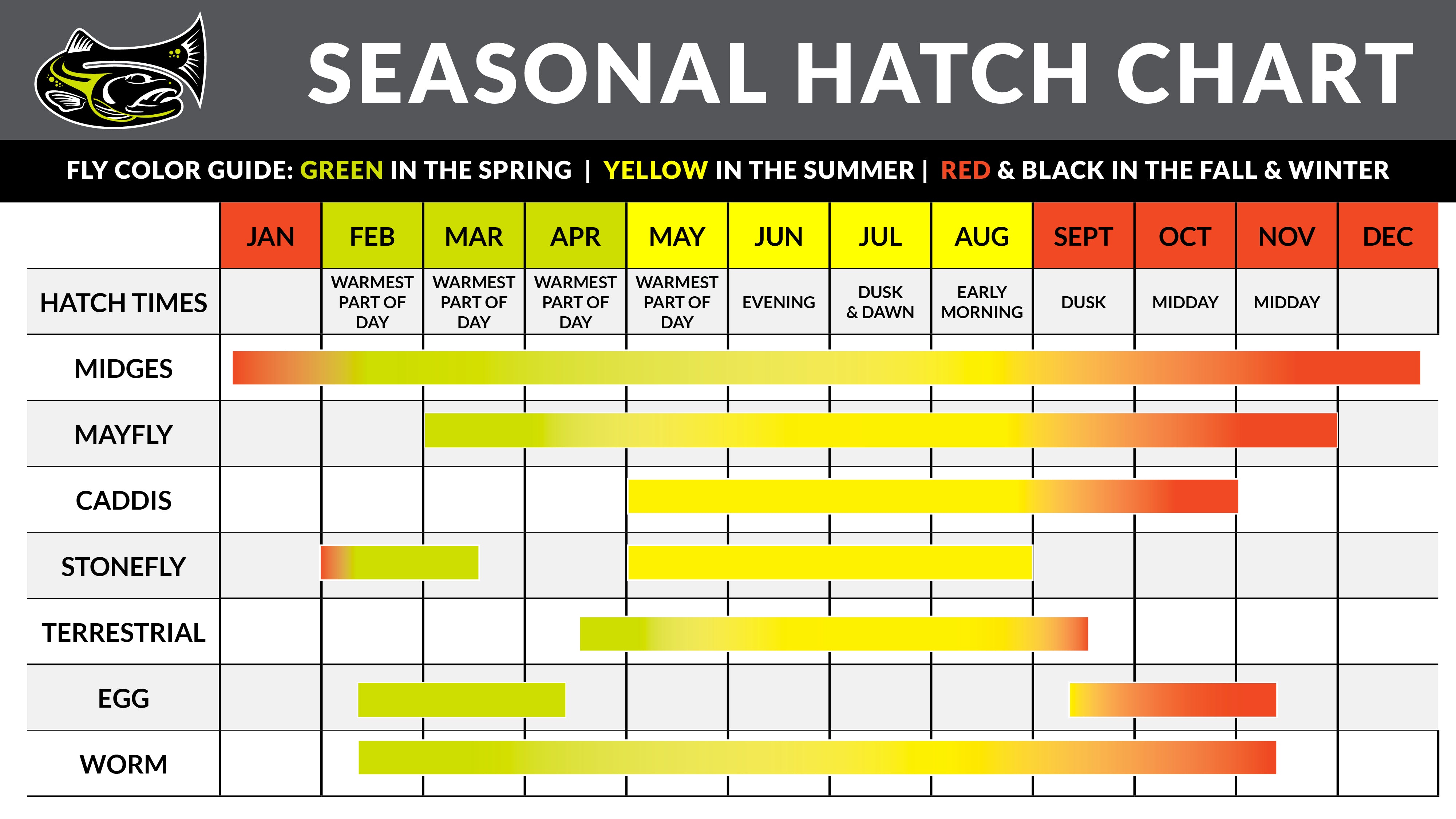
Midges are present all year, but they dominate early spring when larger insects are still limited.
Midge hatch fly fishing becomes especially productive when:
-
Water temperatures remain cold and stable
-
Wind is minimal
-
Fish are holding in slow, protected lanes
Midges emerge continuously rather than in defined bursts. You may see sporadic rises with no obvious insects in the air. That usually means trout are feeding on pupae just below the surface or tiny adults trapped in the film. This is why midges dominate early-season trout diets. According to Penn State Extension, aquatic insects such as midges remain active throughout the year and often become the most reliable trout food source in colder months.
Unlike BWOs, midge sizes stay extremely small. Precision becomes more important than profile.
This is the first big reason anglers struggle to match midge hatches for trout—everything looks “about right,” but very little looks exactly right.

Why do both hatches overlap in early spring
One of the most productive—and confusing—early-season scenarios is when BWOs and midges overlap.
On the same afternoon, you may see:
-
Occasional BWO duns floating down the seam
-
Consistent midge pupae drifting just under the surface
-
Fish switching between both food sources
To consistently catch fish, you need a flexible system that covers both. This is what separates casual hatch fishing from true early-spring success.

Must-Have Patterns for Each Hatch
Your box does not need to be huge. It needs to be focused.
If you want the best flies for BWO and midge hatches, start with patterns that cover the most important stages. Many of these BWO and midge patterns also appear in our full breakdown of the best trout flies for March, where we cover seasonal fly selection in more detail.
BWO patterns you should always carry
These blue-wing olive patterns consistently match early spring behavior.

Sparkle Dun (BWO)
The Sparkle Dun is a low-riding dry that sits partially in the film. This matches struggling BWOs better than high-floating traditional dry flies.
It excels when:
-
Fish are rising but refusing high-profile dries
-
You see subtle head-and-tail rises
-
The water is flat and clear
Sizes typically range from 16 to 22 in early spring.

RS2 (BWO)
The RS2 is one of the most effective transitional patterns for the early season.
It represents:
-
Emerging nymphs
-
Crippled duns
-
Low-floating adults
The RS2 is deadly during long, slow hatches when trout feed just below the surface. If you are building a reliable BWO fly selection chart, this pattern belongs at the top.
BWO nymphs
Before any surface activity begins, trout feed heavily on nymphs. A slim, lightly weighted BWO nymph fished close to the bottom or through the mid-column often outperforms dries early in the hatch window. This is especially important on cold mornings when no surface activity is visible.

When BWOs are the dominant early spring hatch, having the right stage coverage is far more important than carrying dozens of random patterns.
Midge patterns that produce in early spring
Midges are small, but they create big problems for anglers who underestimate them.

Zebra Midge
The Zebra Midge remains one of the most consistent patterns for early spring. It works because it:
-
Matches pupae drifting just before emergence
-
Cuts through glare and depth with subtle flash
-
Maintains profile even in ultra-small sizes
This is one of the top midge patterns for early spring across nearly every river type.

Griffith’s Gnat
Despite its simplicity, the Griffith’s Gnat remains a powerful adult imitation.
It works best when:
-
You see noses poking through the surface
-
Fish are refusing larger dries
-
You need a pattern that floats low and blends into surface clutter
It is especially effective in flat tailwater runs and slicks.
Midge emergers and pupae
If you frequently miss subtle takes, you are probably fishing too high. Midge pupae and emergers fished 6 to 18 inches below the surface account for a large percentage of early spring trout.
If you’re asking what flies to use for a BWO hatch while midges are present, the answer is often:
-
A BWO emerger up top
-
A midge pupa below
Midges demand even more precision than mayflies. Size consistency, profile, and stage selection determine whether trout eat confidently or refuse repeatedly.

Rigging and Tippet Choices
Matching tiny insects is meaningless if your rig destroys the presentation. Early spring demands finesse. Before hatch season begins, many experienced anglers rebuild their leaders and rigs during the off-season using systems outlined in this nymph rig setup for trout guide.
Light tippet matters
When fishing early spring dry flies and micro emergers, most successful anglers rely on:
-
6X tippet for general conditions
-
7X when water is extremely clear and calm
Light tippet allows:
-
Natural drift
-
Softer landings
Reduced surface disturbance
It also dramatically improves your ability to match midge hatches for trout that are feeding in slow lanes.

Leader and turnover considerations
Your leader should be long enough to:
-
Separate the fly line from the fly
-
Eliminate micro-drag in soft seams
-
Allow your flies to drift independently
A 9–12-foot leader is common for early spring hatch fishing, especially when trout are feeding selectively.

Micro-indicator and dry-dropper setups
When fishing subsurface during hatch periods, avoid bulky indicators. Instead, use:
-
Yarn or foam micro-indicators
-
A small dry fly as a visual indicator
-
Extremely light split shot when necessary
This approach lets you fish midge pupae and BWO emergers with minimal disturbance.

Surface vs Subsurface Strategies
One of the most common mistakes anglers make in early spring is committing too quickly to surface fishing. Hatches are rarely clean and rarely simple.
When to fish the surface
Surface fishing becomes productive when:
-
You see consistent rise forms
-
Trout are feeding in predictable lanes
-
The hatch shows sustained activity for more than 15–20 minutes
At this point, low-profile dries such as Sparkle Duns and Griffith’s Gnats begin to outperform subsurface rigs. However, even then, trout may still feed just under the film.
When subsurface wins
Subsurface presentations dominate when:
-
You see sporadic rises with no clear rhythm
-
Fish are bulging but not breaking the surface
-
Wind or glare makes surface feeding unreliable
This is when RS2s, midge pupae, and slim nymphs shine.
If you want the most consistent early spring trout hatch matching flies, prioritize:
-
Emergers
-
Transitional patterns
-
Lightly weighted pupae

Dry-dropper combinations for overlapping hatches
One of the best ways to cover both BWOs and midges simultaneously is with a dry-dropper system.
Common combinations include:
-
Sparkle Dun with a Zebra Midge below
-
Griffith’s Gnat with an RS2 dropper
-
Small BWO dry with a midge emerger
This lets you sample both feeding levels without constantly rerigging. It also helps you identify what stage trout are truly focused on.

Location and Timing Tips
Even with perfect flies and rigs, location matters more than pattern. Early spring hatch fishing becomes even more productive when combined with strong river positioning strategies, which are explained in our early spring trout fishing tactics guide.
Focus on tailwaters and spring creeks
Pre-runoff trout fishing is most consistent in:
-
Tailwaters with stable flows
-
Spring-fed creeks
-
Lower gradient sections that warm slightly faster
These waters support steady midge populations and predictable BWO activity. This is why many anglers refine their early drift techniques during this window using systems described in Pre-Runoff Playbook: Early Spring Trout Tactics.

Look for low-velocity feeding lanes
Trout feeding on tiny insects rarely hold in fast water. Instead, target:
-
Inside seams
-
Foam lines
-
Soft edges next to the main current
-
Slight depressions in flats
These areas allow trout to feed efficiently on small drifting insects without expending energy.

The power of sunny afternoons
While overcast days are classic BWO weather, sunny afternoons in early spring still trigger feeding—especially for midges.
Pay attention to:
-
Shallow tailouts warming slightly
-
Flat glides below riffles
-
Banks that receive consistent sunlight
These subtle temperature shifts can activate both midge emergence and BWO nymph movement.

Matching Size and Stage—Not Just Species
Biologists have long observed that trout often focus on the most vulnerable stage of an insect. During hatches, fish frequently key on emerging insects trapped in the surface film rather than fully formed adults.
One of the biggest problems in trout hatch matching flies is overthinking the species and underthinking the stage.
Ask yourself:
-
Are fish eating in the film or below it?
-
Are rise forms splashy or subtle?
-
Are refusals happening on high-floating flies?
If you miss strikes or see fish rise behind your fly without committing, change stage before changing color or pattern.

For BWOs, this often means moving:
-
From dun to emerger
-
From emerger to ascending nymph
For midges, this usually means moving:
-
From adult to pupa
-
From pupa to deeper drift
This small adjustment dramatically improves success.

Fine-Tuning Your BWO Fly Selection Chart
If you want a practical system for early spring, organize your BWO fly selection box by stage.
Nymph stage
-
Slim BWO nymphs
-
Lightly weighted patterns
Emerger stage
-
RS2
-
CDC emergers
Dun stage
-
Sparkle Duns
-
Low-profile parachutes
This allows quick changes without second-guessing.
Learning to Adjust Faster Than the Fish
The anglers who succeed most consistently during early spring hatches are not the ones with the most expensive rods or the most flies.
They are the ones who:
-
Recognize when trout shift stages
-
Adjust depth and drift before changing patterns
-
Refine leader and tippet systems ahead of time, as outlined in Rig Like a Pro: Off-Season Leader & Tippet Systems
This mindset turns frustrating early spring afternoons into predictable feeding windows.

Final Thoughts: Confidence Comes from Preparation
Early spring trout are selective, cautious, and rarely forgiving. But when you understand hatch timing, stage behavior, and precise presentation, the best flies for BWO and midge hatches become tools—not guesses.
By focusing on:
-
Proven blue-wing olive patterns
-
Reliable midge hatch fly fishing setups
-
Light tippet and subtle rigs
-
Accurate stage matching
…you position yourself for consistent success before runoff clouds the rivers and crowds arrive.
Small flies demand big attention to detail—but when it all comes together, few moments in fly fishing are more satisfying than watching a trout sip a perfectly matched BWO or midge from the surface on a quiet early spring afternoon.

About the Author
This guide was written by Matthew Bernhardt, a Colorado-based angler with over 35 years of experience fishing Western rivers, including the Colorado, Arkansas, and Blue River. He is the founder and owner of Drifthook Fly Fishing, which he has operated since 2015.
Matthew specializes in trout rigging systems, leader construction, and technical nymphing presentations. Over decades of fishing high-altitude tailwaters and freestone rivers, he has field-tested dozens of leader and tippet configurations across varying water clarity, flow rates, and seasonal conditions.
His focus is helping anglers build efficient, reliable fly fishing systems so they spend less time adjusting gear and more time fishing effectively.