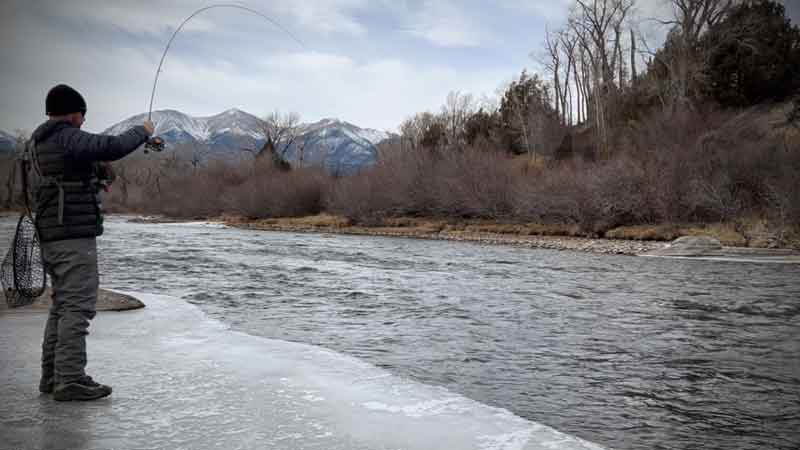
Winter has a way of exposing weaknesses in our setups. In warm months, trout will often move for a fly that’s close enough. They’re active, opportunistic, and willing to slide a foot or two to intercept food. In winter, that margin disappears. “Close” is great in horseshoes and hand grenades, but when nymphing during the winter, you have to be more precise if you want to get one in the net.
The nymphs you use in winter need to drift where trout are feeding, at the correct speed, with minimal wasted motion. Anything less—and the fly might as well not be there.
That’s why nymphing depth and weight in winter is one of the most important skills an angler can develop. When water temperatures drop, trout slide tight to the bottom, hold in slower currents, and feed selectively. They conserve energy, inspect food longer, and refuse anything that looks even slightly off. Inches matter. Weight matters. Drift speed matters.
At Drifthook, we believe winter fly fishing isn’t about working harder—it’s about fishing smarter. When you understand how to balance depth, weight, and drift, winter transforms from frustrating guesswork into a season of deliberate, technical success with rewards that match the effort.
This guide breaks down how to set depth more effectively, balance weight without killing your drift, read current speed, and fine-tune rig adjustments for different winter waters—so every cast has a better chance at making your adventure that more enjoyable.

Why Depth is Important in Winter
In cold water, trout rarely chase. Their metabolism slows dramatically, and they conserve energy by feeding inches off the bottom, often in the slowest available water. If your fly drifts even a foot above them, your chances at success dwindle.
This is why setting the depth of your nymphs becomes more important in winter than fly choice, color, or pattern variation. Trout aren’t roaming or reacting—they’re holding. Your job is to place the fly directly in their feeding lane and keep it there long enough to get that bite.
Winter trout typically sit:
-
Tight to the riverbed
-
Just above gravel or rock transitions
-
On the inside edge of seams
-
Near drop-offs, entering slow, deep pools
-
Along soft edges where the current speed drops suddenly
These are places where food funnels naturally without forcing trout to expend energy. The feeding window is narrow, often measured in inches rather than feet. That’s why winter success comes from accurate drifts, not volume.
When anglers say winter fishing is slow, it’s usually because their flies never reach the strike zone—or pass through it too quickly to register. It happens to all of us. But with the right rig setup and presentation, you can have greater success.
Fun first. Depth second. Everything is icing on the cake.

Setting Indicator Depth
Indicators are not just strike detectors—they’re depth-control tools. A strike indicator is typically placed above the first fly in the rig, and its position relative to the first fly determines how deep the flies will fish. In winter, indicator placement is one of the biggest differences between consistent success and long, fishless days.
An indicator that’s set too shallow gives you confidence without results. One that’s set too deep causes constant hang-ups and broken drifts. For a good nymph rig, the distance from the indicator to the first fly should be between 6 and 8 feet, using a leader that matches the length of your fly rod. 9-foot rod, 9-foot leader. The sweet spot is narrow, but when you find it, winter fishing suddenly clicks and becomes enjoyable.
The sweet spot is narrow, but when you find it, winter fishing suddenly clicks—especially as flows fluctuate and anglers learn runoff tactics to stay dialed as depth and current change.

Try the 1.5x Depth Rule
A reliable starting point for indicator fishing is the 1.5x depth rule:
Set your indicator at one and a half times the depth of the water you’re fishing.
If the water is 4 feet deep, your indicator should sit roughly 6 feet above the point fly. This accounts for leader angle, current drag, and sink time. It’s not a perfect formula—but it’s a great starting point.
That said, winter often demands more than “close enough.” If you’re not ticking bottom occasionally, you’re almost certainly fishing too shallow.

Leader Length & Fly Spacing
Longer leaders help flies sink more naturally and maintain a cleaner drift, especially in clear winter water. The butt section of the leader provides stability and control, and its length and configuration can influence presentation. Many experienced winter anglers fish leaders between 9 and 12 feet, even on small streams.
Fly spacing also plays a critical role in nymph rig balance:
-
Ponit fly (heaviest fly or anchor fly): gets down fast and anchors the rig
-
Second Fly or Dropper fly (lighter): rides just above the bottom, in the prime feeding zone. Depending on your rig, this can be above or tailing your point fly.
-
3rd Fly (Top Fly or 3rd on multiple rig system): in a multi-fly rig, the 3rd fly targets fish feeding higher in the water column and can be adjusted based on observed bites to optimize depth and presentation
Spacing flies 12–18 inches apart keeps the rig streamlined, reduces tangles, and allows each fly to fish independently. The thickness of the attached tippet also affects how quickly the nymph drops, with thinner tippet allowing for a faster drop rate. If you want to explore rigging setups for different water types, adjusting fly spacing is one of the simplest—and most effective—variables to experiment with.

Fine Indicator Adjustments
Winter trout won’t forgive sloppy depth control. Adjust often and deliberately:
-
No bottom contact? Slide the indicator closer to your fly line for a deeper presentation.
-
Hanging up constantly? Raise it a few inches. Slide it closer to your flies to shorten the distance from your indicator to your anchor fly
-
Seeing hesitation but no hookups? Adjust depth before changing flies.
Even a 2–3 inch adjustment can unlock an entire run. Indicator placement for trout in winter is never “set it and forget it.” It’s a constant conversation between you and the water.
Balancing Weight and Drift Speed
Weight gets flies down—but too much weight ruins the drift. Sometimes, additional weight is needed to ensure the nymph reaches the desired depth, especially in faster water. The goal is to sink efficiently without dragging unnaturally, a balance that defines effective winter nymphing.
Think of weight as a precision tool, not a blunt instrument. The best winter rigs sink quickly, stabilize fast, and then drift freely at the speed of the bottom current. In fast water, more weight is required for the nymphs to drop at the same speed as in slow water.
If you don't see your indicator bounce while nymphing, it's a sign you should add more weight to your rig.

Bead Choice Matters
Your first fly or point fly should have significant weight. Tungsten bead head flies are great year-round but even better for winter fishing. They provide maximum sink rate with minimal bulk, allowing flies to cut through cold, dense water without looking unnatural.
General bead guidance if based on a size 14-18 size fly:
-
Shallow or slow water: 2.0–2.5mm tungsten
-
Moderate depth: 2.8–3.3mm
-
Deep pools or fast seams: 3.5mm+
Whenever possible, adjust bead size before adding split shot. Cleaner rigs drift better, snag less, and transmit strikes more clearly—especially in cold conditions where takes are subtle.
Most small patterns won't have large 3.8mm beads. As your first fly or a point fly, no problem. It’s there to get the rig down. But on tag fly or second, or 3rd fly on a tandem rig, we recommend unweighted flies for a more natural drift.

Split Shot: Less Is More
Split shot is a powerful tool for adjusting depth presentation, but start small and work your way up until you find the right depth.
Best practices include:
-
Start with one small shot
-
Place it 6–10 inches above the point fly
-
Add weight incrementally
-
Use micro-shot for fine-tuning
Stacking multiple large shots creates hinge points that cause unnatural drag and increase snagging. If your rig feels “clunky,” it probably is.
Drift Speed Is Everything
Winter trout expect food to move at the speed of the bottom current, not the surface. If your indicator races ahead of bubbles, foam, or debris, your flies are moving too fast.
Mend upstream. Extend drifts. Slow everything down.
A good winter drift often looks almost too slow—until a trout eats. When in doubt, slow it down even more.
Dial in your depth and drift with Drifthook’s Euro Nymph Kit—built for precise control all season long.

Reading Current Speed and Adjusting Accordingly
Depth and weight don’t exist in a vacuum—they’re shaped by current speed. Understanding where water slows naturally makes winter depth control far easier. Pocket water—small, fast-moving sections behind rocks or in tight channels—can offer prime winter holding spots for trout.
Rather than forcing weight into fast water, look for places where the river does the work for you. In these situations, managing slack line is crucial to ensure a natural drift and improve bite detection.
High-Percentage Winter Water
Focus on areas such as:
-
Inside seams where fast water meets slow
-
Drop-offs entering deeper pools
-
Tailouts below riffles
-
Soft edges behind boulders, logs, or banks
These zones deliver food consistently while allowing trout to hold with minimal effort. They also allow your rig to settle quickly and drift cleanly.
Check out our full article on the optimal locations to find winter trout >
Adjusting on the Fly
As current speed changes, your rig should change with it:
-
Faster water: more weight or deeper indicator
-
Slower water: lighter rig, longer drift
-
Variable seams: frequent micro-adjustments
Pay attention to how often you touch the bottom. Occasional contact is good—it means you’re in the zone. Constant dragging means you’ve gone too far.
Many experienced anglers rely on a mental fly-fishing drift-depth chart, matching depth, speed, and weight instinctively. With time, these adjustments become second nature.

Fine-Tuning for Different Waters
Not all rivers behave the same in winter. Dialing in fly line depth control depends heavily on the type of water you’re fishing. Selecting the right nymphing technique and nymph patterns is essential for adapting to different water types.
Tailwaters
Tailwaters are often clearer, colder, and more technical. Fish see more pressure and have more time to inspect your presentation.
Best approach:
-
Lighter rigs - Explore Tight Line Nymphing or Euro Nymphing
-
Fewer split shots
-
Longer leaders
-
Subtle indicator adjustments
Here, precision beats power. Slight changes in depth or drift speed often matter more than changing patterns. If midges dominate the system, this is the time to see full midge tactics and refine your approach accordingly.

Freestones
Freestones demand a different mindset. Variable flows, broken current, and inconsistent depths require adaptability.
Effective strategies include:
-
Heavier tungsten beads
-
Occasional stacked split shot
-
Shorter, controlled drifts
-
Frequent depth changes
Depth is harder to maintain, so err slightly on the heavier side and adjust as needed. Winter freestone fishing rewards anglers who stay engaged and adjust constantly.
Dial in your depth and drift with Drifthook’s Euro Nymph Kit—built for precise control all season long.

Common Winter Depth Mistakes
Even experienced anglers struggle with winter depth control. Watch out for these common issues:
-
Fishing too shallow out of habit
-
Adding too much weight too quickly
-
Ignoring subtle bottom contact—if you can't feel your fly bounce along the bottom substrate, you may not be fishing at the correct depth
-
Failing to adjust the indicator placement
-
Relying on fly changes instead of depth changes
If you’re not catching fish, change depth before changing flies. Most winter problems aren’t pattern problems—they’re presentation problems.
3 Quick Actionable Tips
-
Adjust depth before switching patterns
Most winter failures are depth-related, not fly-related. -
Tick bottom occasionally
That’s where trout live in cold water. -
Slow the drift more than feels natural
Winter trout expect it—and reward it.

The Power of Precision in Winter Nymphing
Winter fly fishing strips everything down. No crowds. No rush. No distractions. Just you, the river, and a drift that either works—or doesn’t.
When you dial in depth and weight, confidence replaces frustration. Each cast feels intentional. Each adjustment teaches something. A skilled fly fisherman can use precise techniques, such as controlled rod movement and line management, to present the nymph at the perfect depth and maximize effectiveness.
At Drifthook, we believe fly fishing isn’t about guessing—it’s about understanding. Mastering nymphing depth and weight in winter connects you more deeply to the river and to the craft itself.
Dial in your depth and drift with Drifthook’s Guide Nymph Assortment and Euro Nymph Assortment—built for precise control all season long. When winter demands precision, the right tools make all the difference. Sinking lines can also help anglers maintain their flies at a specific depth for an extended period during retrieves, which is crucial for winter success.

About the Author
Matthew Bernhardt is a third-generation Coloradan and two-time Master Angler Award winner who grew up immersed in Colorado’s fly-fishing culture, learning on the water alongside experienced guides and lifelong anglers.
Blending real-world fishing experience with insights from seasoned anglers—and a fine arts degree from Colorado State University—Matthew spent five years developing the Drifthook Fly Fishing System, a proven approach designed to help anglers catch more trout with confidence.
When he’s not with his family, you’ll find him on the water chasing MONSTER trout and counting down the days until his kids are old enough to join him riverside.