If you want to catch big trout, you need to think like a big trout. And big trout think about stonefly nymphs. Not occasionally, not just during the hatch, but all year long, in every river where stoneflies live and crawl along the bottom. These insects are substantial food, and the fish that have learned to eat them regularly are the fish worth chasing.
This guide covers everything you need to put stonefly nymph patterns to work: the life cycle, the patterns that actually produce, how to fish them in different water types, and where to go if you want to find the best stonefly fishing in the country.
And if you already know your way around a nymph rig, this is where it pays off.

Why Stoneflies Mean Big Trout
Stoneflies are among the largest aquatic insects in North American trout rivers. A mature golden stonefly nymph can stretch two inches or longer, and a salmonfly nymph runs even bigger. That's a substantial protein package, and trout that have access to stoneflies know it. They're not burning energy chasing midges when there are stonefly nymphs tumbling through the current.
The size of the food source shapes the size of the fish eating it. Smaller trout tend to work smaller food because the calorie math works against burning energy on a chase that doesn't pay off.
Bigger fish don't have that problem. A 20-inch brown sitting in a seam behind a midstream boulder can absolutely justify tracking down a size 4 stonefly nymph, and it will do exactly that when conditions are right. Targeting stonefly hatches (and the nymphal period leading up to them) is one of the most reliable ways to put yourself in front of trophy-class fish.

The windows, when golden stoneflies and salmonflies are active, draw big trout out of their lies and into feeding postures, sometimes in water where you'd never expect to find them during other times of year.
Rocky Mountain freestone rivers are the classic proving ground for this, but stonefly water exists in nearly every state with a healthy wild trout fishery.
ℹ️ If you want a broader selection that covers stonefly water alongside other big-trout scenarios, the Guide Nymphs Kit gives you that range. Get on the water, get your fly to the bottom, and let the fish tell you what they want.

The Stonefly Life Cycle - What You Need to Know on the Water
Stoneflies go through three life stages: egg, nymph, and adult. The egg and adult stages are short.
The nymph stage is where it matters for fly fishers, because stonefly nymphs spend anywhere from one to three years living on the streambed before they're ready to hatch. That long underwater residency is why stonefly nymph patterns, including those found in life cycle fly assortments, catch fish every month of the year, not just during the hatch itself.

Nymphs live in the cobble and gravel of fast, well-oxygenated water. They're clumsy swimmers and tend to get dislodged during high flows, which is why big stonefly nymph fishing often gets better after a rain event when water is pushing hard, and nymphs are tumbling. Trout know this and position themselves accordingly.
As nymphs mature, they crawl toward the bank to hatch. This migration, usually happening at dawn or dusk, is when the fishing gets serious. Nymphs moving through the shallows and up onto rocks trigger aggressive feeding from trout that are suddenly competing for a limited resource moving within reach. Even after the hatch, spent adults on the water keep fish looking up, but it's that pre-hatch nymphal movement that produces the heaviest fish.
Golden Stonefly vs. Brown Stonefly - Know the Difference

Not all stoneflies are the same insect, and matching your pattern to what's actually in the river matters more than most anglers realize.
The golden stonefly (family Perlidae) is the big one. Nymphs run in sizes 4 to 8, with a warm golden-tan coloration and prominent segmented bodies. They hatch in late spring through early summer, typically May through July, depending on elevation and latitude. If you're fishing the Madison or the Deschutes during salmonfly season, golden stones are the primary target.
Brown stoneflies (family Perlodidae) are smaller, running size 8 to 12, and they hatch earlier in the season, often February through April. They're darker in color, closer to olive-brown or dark amber.
Early-season fishing on smaller freestone streams is often brown stonefly territory, and sizing down from your summer stonefly box is the right call.
When you're fishing unfamiliar water, flip a few rocks in the riffles. If the nymphs you find are over an inch and golden-tan, reach for the bigger patterns. If they're smaller and darker, match accordingly. The trout have already done this research. This same match-the-hatch principle applies across other aquatic insects as well. Understanding which effective mayfly patterns for trout best imitate local food sources can be just as important when fish are keyed in on mayfly nymphs.

Top Stonefly Nymph Patterns for Trout
There are dozens of stonefly patterns floating around, but a relatively short list covers most situations. Here are the ones that consistently produce on American trout rivers.
Pat's Rubber Legs
This is the pattern most anglers reach for first, and for good reason. The rubber legs create movement that a static fly can't replicate, and the overall profile is convincing even in heavy current. Fish it in sizes 4 through 8, usually in brown/black or olive/black. It works year-round on freestone rivers and is nearly mandatory for big western water like the Snake or the Gallatin.

Kaufmann's Stonefly
Dave Kaufmann's classic pattern is an impressionistic design rather than a precise imitation, which makes it adaptable across species and water types. Sizes 4 through 10, tied in black, brown, or golden depending on the hatch you're matching. This one shines during low, clear conditions when trout are being selective about profile rather than just grabbing anything floating by.

20 Incher
A Montana staple that's earned its reputation on freestone rivers throughout the Rockies. The name is aspirational and not entirely unrealistic. Heavy, buggy, and built to sink fast, it's a reliable producer on the Madison and Yellowstone when golden stones are moving. Fish it in sizes 4 through 12.

Girdle Bug
Old school and unapologetically ugly. The Girdle Bug is all rubber legs and chenille, and trout absolutely eat it. When nothing else is working, and the water is dark or fast, this is the pattern you tie on and fish with confidence. Available in sizes 4 through 10, the larger sizes pull the bigger fish.

Prince Nymph Jigged
Built specifically for euro nymphing and tight-line presentations, the tungsten bead version gets down fast without the extra split shot that can kill the natural drift of a stonefly pattern. The extra weight means you can fish deeper, faster slots where big trout hold, but where lighter patterns never quite reach the strike zone. Sizes 6 through 12.

Black Stone Nymph
This one earns its spot early in the season when smaller, darker stoneflies are active. Size 10 through 14, tied in black dubbing with a sparse profile that mimics the early-season species that hatch before water temperatures climb. Small tailwater stretches and freestone creeks in February and March are where this pattern overperforms relative to the attention it gets.

Bead Head Prince Nymph
Technically an attractor pattern, but its silhouette and the white biots used for the tail do a convincing job of suggesting a stonefly nymph in murky water. It works when trout are keyed on stoneflies but aren't being particularly precise, and it covers the gap between a pure attractor and an exact imitation. Sizes 8 through 12.

Copper John
Built for sinking fast and triggering the flash response trout have to shiny, segmented insects. The Copper John isn't a precise stonefly imitation, but it works as a dropper below a larger Pat's Rubber Legs, and some of the most productive stonefly rigs use exactly that combination. Sizes 8 through 14.

👉 Looking for a ready-made selection of the nymphs that produce on stonefly water? Our Euro Nymphs Kit is built around exactly these kinds of patterns, heavy, articulated, and ready to fish.
How to Fish Stonefly Nymphs

The pattern selection matters, but the presentation is where most anglers leave fish on the table. Stonefly nymphs are bottom-dwellers, and if your fly isn't in the bottom third of the water column, you're fishing in the wrong neighborhood.
Euro Nymphing
Tight-line, or euro, nymphing is the most effective method for stonefly patterns in most water types. The direct contact between your hand and the fly means you feel subtle takes that would never register on an indicator, and you can adjust depth and speed continuously through the drift without throwing slack into the system. Heavy tungsten bead stonefly patterns were practically designed for this approach.
Keep the sighter just above the surface, maintain a tight connection to the fly, and lead the drift slightly rather than letting it fall behind the current. Takes from big fish on stonefly nymphs are often confident and fast; you won't miss them if your line is tight. For a deeper breakdown of the mechanics, our guide to nymphing in fly fishing covers the fundamentals.
Indicator Nymphing
For bigger, faster water where tight-line control is harder to maintain over a long drift, a strike indicator setup gives you coverage. Use indicator set at 1.5 to 2 times the water depth, and add enough weight above the fly to keep the nymph in contact with the bottom. The indicator should be moving at roughly the same speed as the surface current; if it's moving faster, you're not deep enough.

The Dead Drift and the Lift
A clean dead drift covers most of your water, but don't pick up as soon as the fly swings out below you. At the end of the drift, let the fly rise naturally as current pressure lifts it toward the surface. This imitates a stonefly nymph swimming up toward the surface to hatch, and it triggers some of the hardest strikes of the day. Big trout that follow the fly through the drift often commit at the lift when the nymph appears to be escaping.
Reading the Water
Stonefly water has texture. You're looking for seams between fast and slow current, the slack water immediately behind large boulders, tailouts at the bottom of runs where the current slows and spreads, and the inside edges of deep slots where the bottom is gravel or cobble. Any place where a nymph dislodged from the streambed would naturally accumulate is worth fishing.
Pocket water behind mid-river boulders is especially productive during runoff and the weeks leading up to the hatch. Fish that might be holding in deeper lies at other times of year move into these pockets to feed when stonefly nymph activity picks up.

Best US Rivers for Stonefly Fishing
Stonefly populations exist across the country, but some rivers have built their reputations specifically around stonefly hatches. These are the ones worth planning a trip around.

Madison River, Montana
The golden stonefly hatch on the Madison in late June is one of the most celebrated events in American fly fishing. Big browns and rainbows that spend the rest of the year in deeper water push into shallower runs and actively feed. Sizes 4 through 6, Pat's Rubber Legs, and 20 Incher, fished early and late in the day.
Yellowstone River, Montana
Big water, big stoneflies, and big trout. The salmonfly hatch on the Yellowstone can be explosive when the timing is right, and the golden stone fishing that follows it through July keeps the action going. This is the kind of water where a size 4 Kaufmann's Stone isn't out of place.
Deschutes River, Oregon
The Deschutes salmonfly hatch is legendary and rightfully so. Huge redside rainbows that are notoriously difficult to fool on smaller patterns throw caution aside when salmonflies are moving. The hatch typically runs May through June, and the fishing pressure that comes with it is real; get there early in the morning or fish water away from the access points.
Arkansas River, Colorado
A serious stonefly fishery that gets less attention than the Montana and Oregon rivers. Arkansas holds good populations of golden stones and produces consistent nymph fishing throughout spring and early summer, with brown trout that run larger than they have any right to in tailwater-influenced stretches.

Green River, Utah
The tailwater stretch below Flaming Gorge is cold, clear, and loaded with stoneflies. The fish here are educated, but a well-presented tungsten bead stonefly pattern on a tight-line rig will find trout in the A and B sections that most indicator fishers walk right past.
North Fork of the Payette, Idaho
A freestone river with a solid stonefly presence and much lighter fishing pressure than the marquee Montana destinations. The hatch timing runs about two weeks behind the Madison, which makes it a good option if you missed the peak elsewhere.
When you're fishing unfamiliar water, look for fast, rocky riffles with cobble or gravel substrate, good water clarity, and cold temperatures. Those conditions support the stonefly nymph populations that big trout rely on, and where the nymphs are, the big trout aren't far behind.

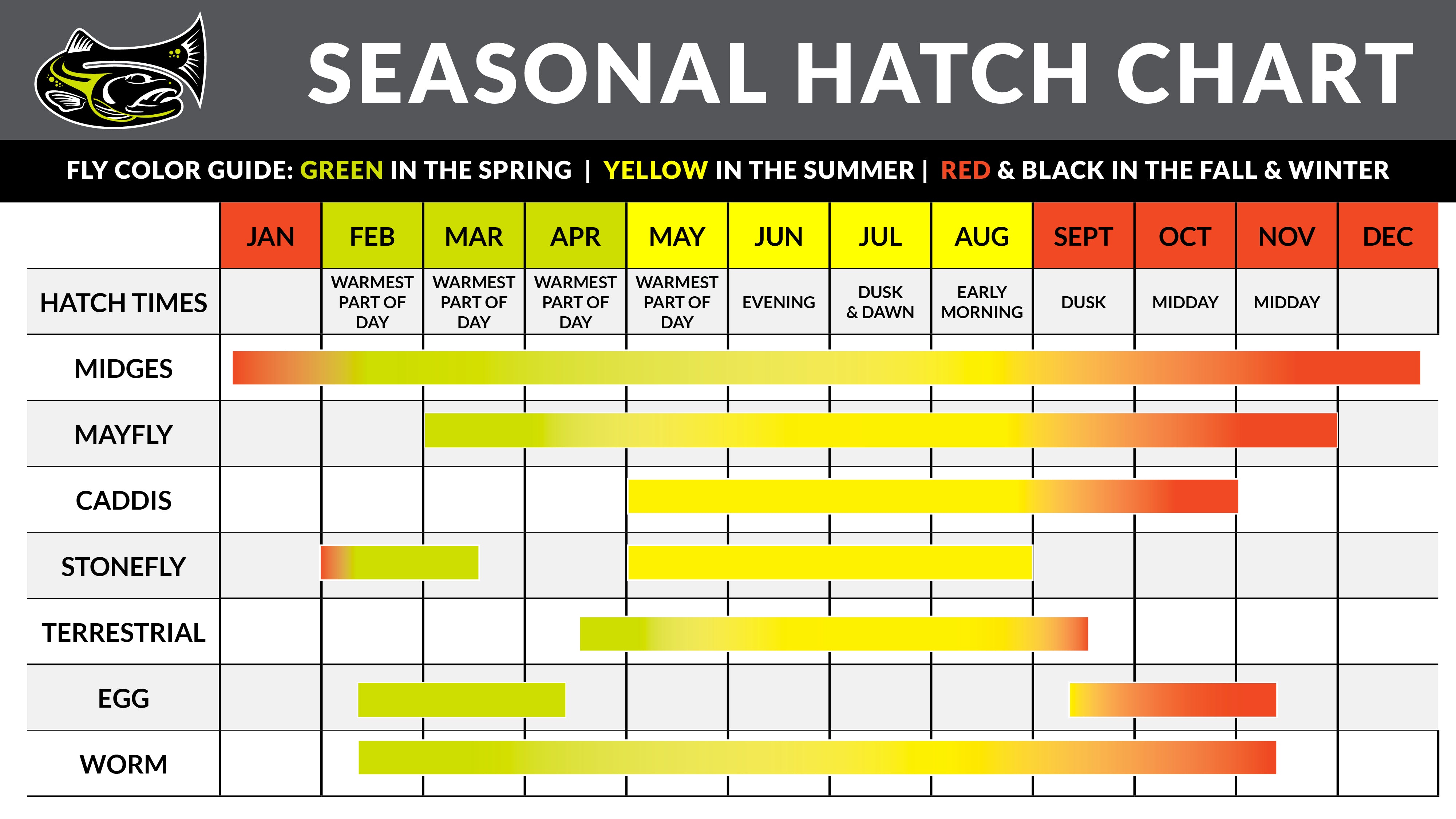
When Do Stoneflies Hatch? Seasonal Timing Guide
Stonefly activity isn't confined to a single window, which is part of what makes these insects so valuable to the angler who pays attention to seasonal shifts.
- February - April (early season): Smaller brown stoneflies in sizes 10 through 14 are active on many freestone rivers. Water temperatures are cold, fish are sluggish, but the early hatch activity is there. Fish Black Stone Nymphs and smaller bead-head patterns low and slow.
- May - June (late spring): Golden stoneflies begin emerging as water temperatures climb into the 50s. Sizes 4 through 8 start producing. This is the buildup period before peak hatch activity, and nymph fishing during this window can be outstanding because fish are anticipating the hatch without the pressure that comes during peak activity.
- June - July (peak summer): Salmonfly and golden stonefly hatches are in full swing on most western rivers. Sizes 4 through 6 on big water. This is the season everyone talks about, and the fishing lives up to it when the timing and conditions align.
- August - October (late season): Stonefly activity drops off on most rivers, but smaller species remain available. Sizes 10 through 12, fished deep on slower water. Big fish are still feeding on stonefly nymphs that have been living on the bottom all summer; they just require a more precise presentation as flows drop and visibility improves.
Knowing the seasonal window for your specific river means you can plan around the hatch rather than arriving and hoping. Most state fish and wildlife agencies publish hatch charts and fishing reports that will tell you whether you're early, on time, or late for the stonefly activity on the water you're targeting.
Stonefly nymphs are also worth keeping in rotation outside the hatch windows, particularly on bigger rivers where trout have access to year-round populations. A Pat's Rubber Legs fished on a cold November morning in Montana can still pull a fish that's feeding opportunistically on nymphs tumbling through a deep run. That's the value of a long-lived nymph that never fully disappears from the menu.
ℹ️ For a sense of how stonefly activity overlaps with other major hatches, knowing how trout feed on larger prey year-round will help you to build your seasonal game plan.
Ready to Fish Stonefly Patterns?
If your nymph box doesn’t have stonefly patterns in it, you’re leaving some of the biggest trout in the river unfished. These insects are a year-round food source, and understanding how they move, where they live, and when they become vulnerable gives you a consistent edge, not just during the hatch, but across the entire season.
Get your fly down where it matters, fish it with intent, and you’ll start seeing the kind of takes that smaller patterns rarely draw.
Our Euro Nymphs Kit is put together for exactly this kind of fishing, heavy patterns built for deep, fast water where stonefly trout live. If you want a setup that’s ready to fish without overthinking it, it covers the core patterns and weights you’ll reach for most often.

About the Author
This guide was written by Matthew Bernhardt, a Colorado-based angler with over 35 years of experience fishing Western rivers, including the Colorado, Arkansas, and Blue River. He is the founder and owner of Drifthook Fly Fishing, which he has operated since 2015.
Matthew specializes in trout rigging systems, leader construction, and technical nymphing presentations. Over decades of fishing high-altitude tailwaters and freestone rivers, he has field-tested dozens of leader and tippet configurations across varying water clarity, flow rates, and seasonal conditions.
His focus is helping anglers build efficient, reliable fly fishing systems so they spend less time adjusting gear and more time fishing effectively.