There is a fish in most trout rivers that doesn't get caught much. It's the big brown trout parked in the shadows under an undercut bank, big enough that it eats other trout and rarely bothers chasing a mayfly.
You can work nymphs and dries past it all season and never get a look, but a streamer is the fly that gets it to move.
Streamer fishing works differently from most fly fishing. Instead of matching a hatch, you tie on streamer flies that look like a wounded baitfish, a fleeing sculpin, or a leech that wandered into the open, and you make the biggest fish in the run come after it. When one does, it doesn't sip. It hits, and you feel it all the way up the rod.
Here's how the patterns, the rigs, and the techniques behind streamer flies fit together.

What Is a Streamer?
A streamer is a large, weighted fly meant to imitate prey that swims rather than drifts. Where dry flies float and nymphs tumble along the bottom with the current, you work streamer flies through the water yourself. They stand in for baitfish, sculpins, leeches, crayfish, and juvenile trout, or the kind of meal a big fish will cross a river to run down.
The difference is intent, as a trout sipping midges is just grazing. A trout that eats a streamer is hunting, and that changes how these flies get built:
- Size. They run bigger, from a modest size 8 up to articulated patterns four or five inches long.
- Weight. Cone heads, dumbbell eyes, or heavy wire get them down and make them dart.
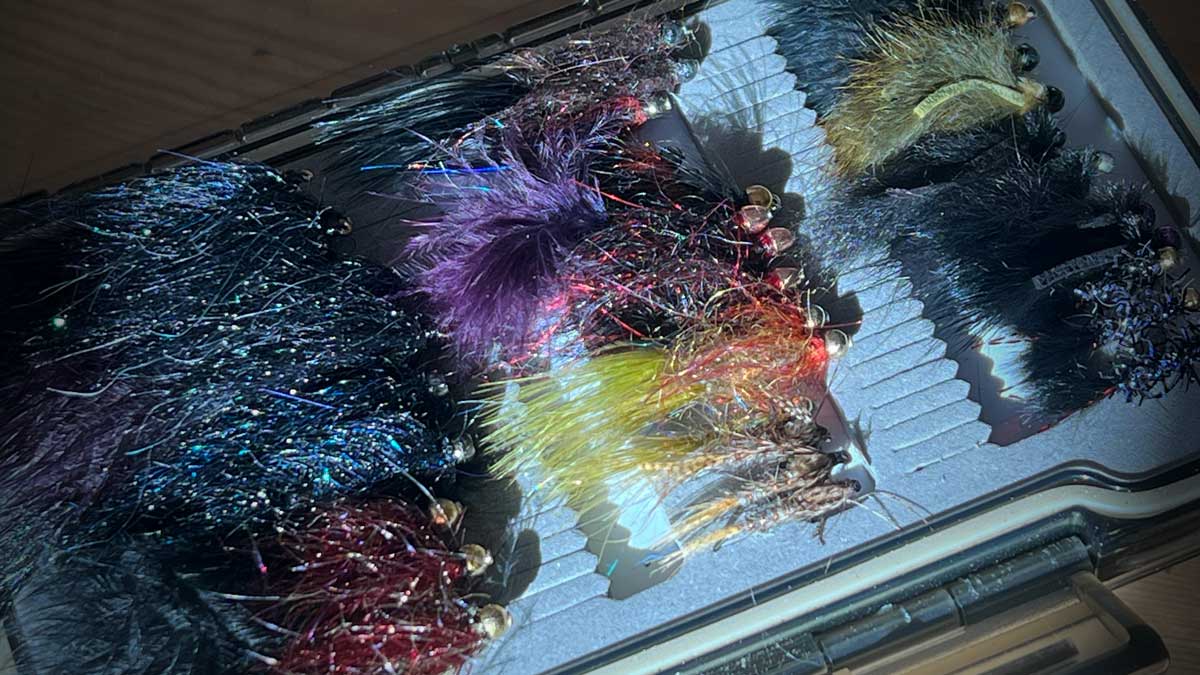
- Materials. Marabou, rabbit strip, and flash move and pulse when you strip them, so the fly reads as alive and easy to catch.
Why Big Trout Eat Them
A big fish didn't get big grazing on insects. Sooner or later, a mature brown or a heavy rainbow burns more energy chasing tiny bugs than the bugs give back. Baitfish and smaller trout make better sense. One good mouthful beats a whole afternoon of sipping mayflies.
That's why streamer fishing skews toward bigger fish. You are not trying to tempt every trout in the run. Instead, you are after the one holding in the deepest, darkest lie. The fish with enough size to treat a four-inch baitfish as a snack.
Brown trout are the worst offenders. Come fall, when they turn territorial and mean ahead of the spawn, streamer flies will pull strikes out of fish that ignore everything else in the box.

Essential Streamer Patterns
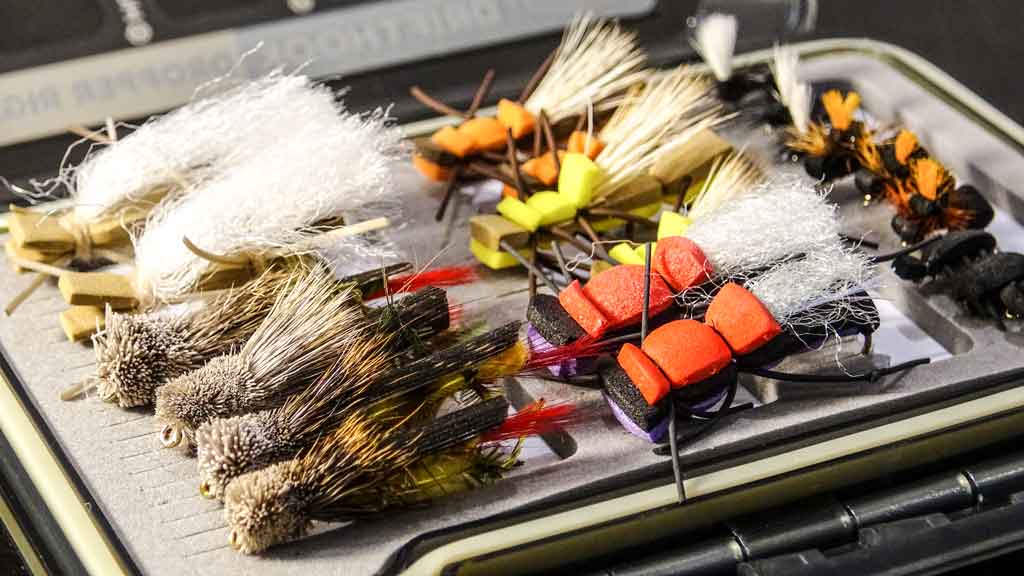
A working streamer setup doesn't need fifty flies. It needs a handful of streamer flies that cover the main prey types, in a couple of sizes and colors. Four patterns form the backbone.

Wooly Bugger
This is the one every angler owns, and for good reason. It imitates nothing specific and everything at once. Depending on how you move it, that's a leech, a baitfish, a crayfish, or a drowned hopper. In black, olive, and brown, it catches fish on water the world over, and it remains the best single streamer a beginner can learn to fish.

Sculpin
The sculpin imitates the bottom-hugging baitfish that big trout hunt hard. Real sculpins are heavy-headed, live down near the streambed, and move in short darts, so fish the fly the same way. Down and dirty, bouncing it along the bottom where the biggest fish sit.

Zonker
Uses a strip of rabbit fur that comes alive in the water, undulating with every twitch of the line. It reads as a wounded minnow, and its profile makes it a strong choice in stained water or low light when a trout is hunting by silhouette.

Muddler Minnow
This is the versatile veteran. Its spun deer-hair head pushes water and creates a wake, so it can be fished deep as a sculpin imitation or skated across the surface for an aggressive top-water grab. Few streamer flies do so many jobs with one pattern.

Gear Setup
Streamer flies ask more of your tackle than dry-fly work does. They are heavy, the casts are punchy, and the fish are big, so the whole setup leans toward backbone over finesse. Here's what that looks like:
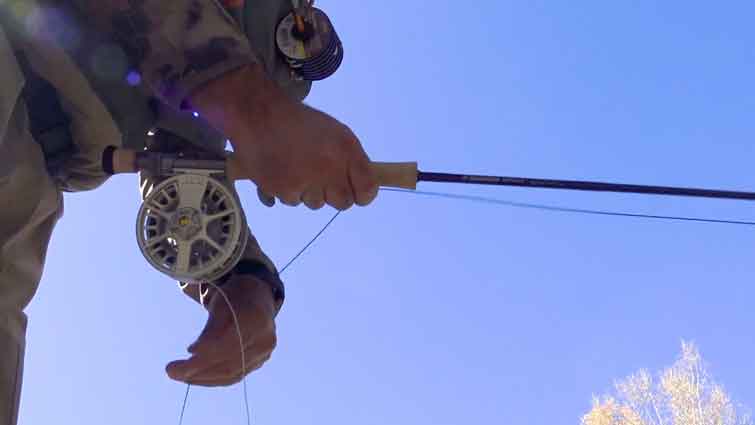
🎣Rod: A 6-weight covers most trout streamers on small to medium rivers. Step up to a 7 or 8 when you're throwing articulated flies, fighting wind, or chasing the biggest fish on big water. The heavier rod isn't about the fight. It's about heaving a weighted, wind-resistant fly all day without wearing your shoulder out.

🎣Line: A floating line is fine in shallow runs, but the fish holding deep in fast current need a sink-tip or full sinking line to reach them. A sink-tip is the most useful all-rounder for river work, getting the fly down without constant mending.
🎣Leader: Short and stout, 4 to 6 feet of 0X to 3X. That turns over a heavy fly and holds up when a big fish hits.

You don't need a long, tapered leader here. The fish is chasing movement, not studying your tippet the way it would a dry fly.
Techniques That Trigger Strikes
The right streamer flies won't do much if you don't know how to move them. A streamer only earns a strike when it behaves like something alive and in trouble. Three techniques cover nearly every situation.
Stripping: Cast across or slightly downstream, then retrieve the fly in short pulls of the line so it darts and pauses like a baitfish that's hurt. Mix up the rhythm. A long strip, two short ones, then a pause where you let it hang, because a chase gets triggered by prey moving like it's in trouble.
Watch for the take on the pause. That's when the fly stops, hangs there looking helpless, and a trout decides to eat.
Swinging: Let the current do the work for you. Cast down and across, then let the fly swing on a tight line through the run, riding the current in an arc. It covers water fast and looks like a baitfish getting pushed sideways by the flow.
On bigger rivers, it's deadly, and it produces some of the hardest hits you'll feel all day, because the fish grabs it with the current already loading your line.
Jiggin: Works the fish holding deep. Lift and drop the rod tip as you retrieve, and the weighted streamer rises and falls like a baitfish that can't hold itself upright. It shines in deep pools and out of a drift boat, where that up-and-down action gets down to the fish sitting tight on the bottom.
Fishing Two at Once
Once you've got the single-fly game down, try running two. A tandem rig ties a second streamer off the bend of the first, 18 to 24 inches back, on a short length of heavy tippet in 0X or 1X so a big fish doesn't snap the connection.
The usual setup pairs a bigger, flashier lead fly with a smaller, more natural trailer, so the trout gets a one-two look: something loud draws its attention, then an easier meal follows right behind.
It's a fall favorite for aggressive browns, and it lets you fish two colors or two depths until you learn what they want that day. Both the Woolly Bugger and the Muddler earn their place as either fly in the pair.

Where and When to Fish Streamers
Streamer flies earn their reputation in specific waters. You're looking for the ambush spots, the places a big fish can hold in cover and pick off anything that swims past:
✔️ Deep pools and the slow water below them
✔️ Undercut banks
✔️ Log jams and sunken timber
✔️ The seams where fast water meets slow
Skip the open, even runs that hold the smaller feeding fish. Target the structure.
Timing is just as important as location. Low light at dawn and dusk brings the predators out, and an overcast day can stretch that window across the middle of the afternoon. High, off-color water after a rain is prime time, too. The trout can't see well, so they hunt by movement and silhouette, and that's when streamer flies really come into their own.
And then there's fall, the season every streamer fisherman circles on the calendar, when brown trout get territorial before the spawn and will hammer a fly out of pure aggression.
Five Tips for Landing Big Trout on Streamers
Hooking a big trout on a streamer is the easy part. Getting it in the net is where a lot of guys come up short.
- Set the hook hard and low. Use a strip set, pulling sharply with the line hand rather than lifting the rod. It drives the hook home into a big fish's tough jaw and keeps the fly in the strike zone if the fish misses.
- Use a stout tippet and check it often. Big fish and abrasive structure punish light or frayed tippet. Run 0X to 3X and inspect it after every serious take or contact with wood and rock.
- Let the fish run. A heavy trout will make strong runs, and clamping down invites a break-off. Use the reel's drag and the rod's flex, and keep steady pressure rather than trying to muscle the fish in.
- Fish barbless and land quickly. Pinching the barb makes for a faster release and less handling, which protects the fish and gets the fly back in the water sooner.
- Have a net ready. A big trout at your feet is not landed until it's in the net. A proper net ends the fight fast, keeps the fish calm, and protects it for release.

Wrapping Up
Streamer fishing takes more work than drifting a dry fly, and it puts you in front of bigger fish for it. Get the patterns right, rig with enough backbone to handle the flies and the fish, and read the water for the spots where the big ones hold. You're not going to catch the trout of your life on a size 18.
Ready to build a box that can do the job? The Streamer Surge Fly Fishing Kit puts 35 hand-tied streamer flies, including leeches, sculpins, and baitfish, in a labeled, water-resistant case that fits a vest or sling pack. No sorting through the bins, wondering what to tie on - just a well-organized box of streamer flies.

About the Author
This guide was written by the Drifthook Fly Fishing team, drawing on decades of experience fishing streamers for large trout on Western rivers, including the Colorado, the Arkansas, and the Blue. Drifthook has been helping anglers understand trout behavior, prey imitation, and on-the-water tactics since 2015.
Frequently Asked Questions
What size streamer flies work best for big trout?
Most trout streamer flies run from a size 8 up to articulated patterns four or five inches long. Start around a size 6 to 4 for a good all-around size, then go bigger in high or stained water when you want a stronger silhouette, and smaller on clear, low water where a subtle profile draws more takes.
What's the best time of day to fish streamers?
Low light is your friend. Dawn and dusk bring the predators out to hunt, and an overcast day can keep that window open through the afternoon. Bright midday sun is the toughest stretch, though deep pools and shaded banks still hold fish worth a cast.
Do I need a sinking line to fish streamers?
Not always. A floating line handles shallow runs fine, but a sink-tip is the most useful setup for getting the fly down into the fast, deep water where big fish sit. If you only buy one, make it a sink-tip.
Can beginners catch trout on streamers?
Yes. A Woolly Bugger on a floating line, cast out and stripped back, catches fish for anglers of every level. Streamers reward a bit of practice, but the basic retrieve is easy to learn.