A successful nymph rig is not simply about choosing the right flies. It is about getting those flies into the part of the water column where trout are feeding and keeping them there long enough for a fish to find them. A perfectly matched fly is unlikely to produce if it spends the entire drift above the trout's feeding lane.
A properly built two fly nymph rig setup gives you more control over depth, fly size, and presentation. By combining a weighted anchor fly, a lighter point fly, split shot, or different bead weights, you can adjust your rig to changing current speeds and water depths without constantly rebuilding everything.
The key is learning how the rig responds underwater and making small adjustments based on what the water tells you.

Why Depth Control Drives Nymph Rig Success
Trout often feed close to the river bottom because the current delivers food to them there while allowing them to conserve energy. This does not mean every trout is exactly on the bottom, but keeping your flies roughly 8–12 inches above the bottom can be a useful starting point when conditions call for a near-bottom presentation.
That distance can change depending on the river. In slower water, trout may comfortably move several inches or more to intercept a nymph. In faster current, they may hold closer to the bottom and have less time to react to a passing fly.
This makes depth a moving target. Your goal is not to permanently sit on the bottom. Instead, you want your flies to spend a significant portion of the drift inside the trout's likely strike zone.
Finding that strike zone starts with understanding where trout hold in different currents. If you need a refresher, our guide to reading trout water breaks down seams, feeding lanes, holding water, and other places trout are likely to set up.

A simple way to think about depth control is to consider fly weight, added weight, leader length, and current speed together. If your flies are consistently riding too high, you need more weight, a longer sink window, or a presentation angle that allows the rig to descend. If the flies are constantly dragging or snagging, you may have too much weight, too much leader contact, or an angle that forces the flies directly into the bottom.
Make one adjustment at a time. Add a small amount of weight before completely rebuilding your rig. Shorten your spacing before changing both flies. Change your casting angle before automatically adding more split shot. Small adjustments make it easier to understand what is actually improving the drift.
Building a Two-Fly Rig From the Top Down
A basic two fly nymph rig setup using an indicator uses two flies positioned at different points on the leader. The upper fly is often called the anchor or lead fly. It typically provides more weight and helps the rig reach depth.
The lower fly, often called the point fly, can be lighter and more imitative. Because it is farther away from the main weight, it can move more naturally through the current.
This combination creates an important advantage. You can use one heavier fly to establish depth while allowing a smaller or unweighted fly to imitate a different food source.

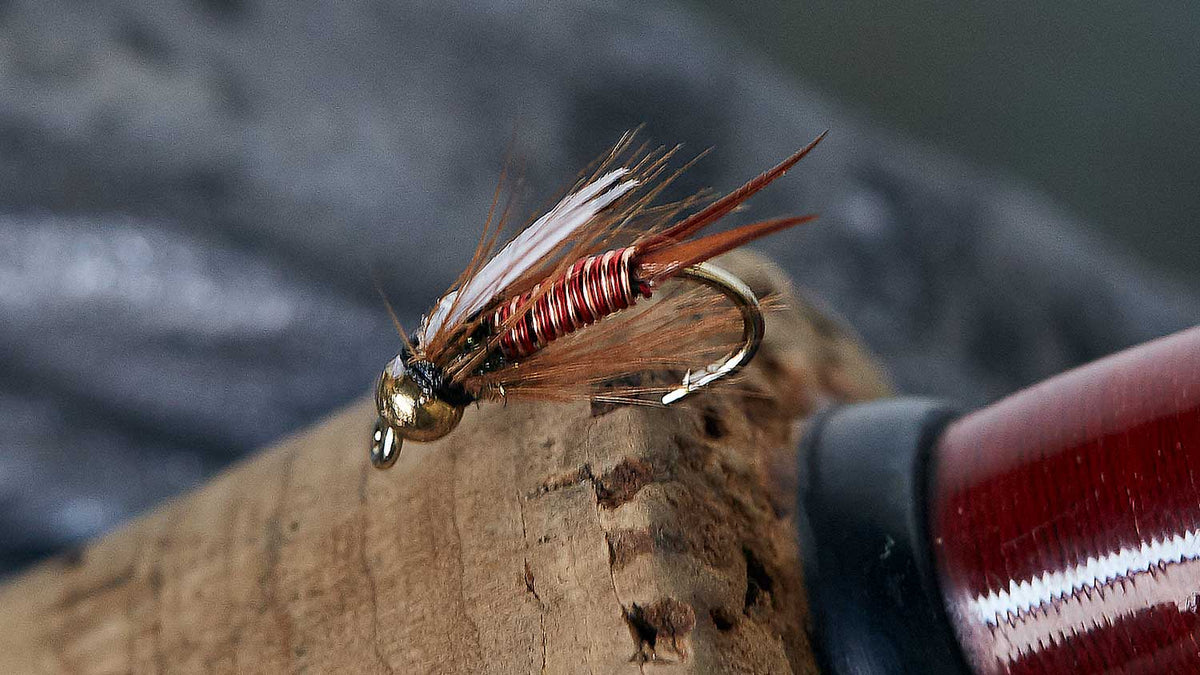
For example, you might use a tungsten stonefly nymph as the anchor and a smaller mayfly emerger as the point fly. The heavy stonefly helps get the rig down while the smaller pattern provides a more subtle presentation.
The exact arrangement depends on your local regulations and the type of rig you are fishing. Always verify that two-fly rigs, dropper configurations, and attached weight are legal where you fish.
If you want to compare this setup with other options, our guide to nymphing rigs for fly fishing covers two-fly, indicator, and other nymphing setups you can adjust for different water.
Anchor Fly and Point Fly
The anchor fly is usually the heavier pattern. Its primary job is to help the system reach the desired depth while also presenting a food source that trout may eat.
The point fly is usually lighter and can be smaller or more delicate. It may imitate an emerger, mayfly, caddis, midge, or another food source.
The two flies do not need to match. In fact, contrasting them can make the rig more useful. A large stonefly paired with a small mayfly gives you two different profiles and allows you to test what the trout want during the same drift.
This makes a two-fly system particularly valuable when conditions are changing and you are still trying to determine the dominant food source.
Split Shot, Beads, and Weighted Flies—When to Use What
There is no single best way to add weight to a nymph rig. Split shot, bead-head flies, and tungsten anchor patterns each provide different levels of control.
Your choice should depend on the depth you need, the speed of the current, and how naturally you want the flies to move.

Split Shot for Precise Depth Adjustment
Split shot provides one of the simplest ways to fine-tune a rig. If your flies are fishing too high, you can add a small amount of shot. If the rig becomes too heavy, you can remove it.
This makes split shot particularly useful when conditions change throughout the day. A deeper run may require additional weight, while a shallow riffle may require less. Instead of changing your flies, you can make a relatively small adjustment to the weight system.
These split shot nymphing tips are especially useful when fishing different depths with the same basic rig.
However, split shot can also create problems. Too much weight can cause the rig to snag repeatedly, and poorly positioned weight can affect how the flies move. Use the smallest amount necessary to achieve the desired depth.

Bead Heads for Built-In Weight
Bead-head flies provide weight without requiring additional shot. This makes them convenient when you want a clean, straightforward rig. A brass bead provides moderate weight, while a tungsten bead generally gets the fly down faster.
The choice between a weighted and unweighted fly depends on what you need the individual fly to accomplish. Understanding bead head vs unweighted flies is particularly useful when building a two-fly rig because you can create a deliberate weight difference between your patterns.
For example, a tungsten bead-head stonefly can serve as the anchor while an unweighted midge or emerger provides a more natural upper-water presentation.

Tungsten Anchor Flies
Tungsten is one of the most efficient ways to add weight directly to a fly. A tungsten bead or tungsten-bodied nymph can descend quickly and maintain depth in strong current.
This makes tungsten anchor flies especially useful in deep runs, fast seams, and situations where you need the rig to reach the bottom quickly.
The tradeoff is that a heavily weighted fly can become difficult to control in shallow water. It can also increase snagging if you use too much weight for the conditions.
The goal is not maximum weight. The goal is efficient depth.

Ideal Spacing Distances for Two-Fly Rigs
Spacing determines how the two flies occupy the water column. A common starting point is approximately 12–18 inches between flies.
This distance gives the flies enough separation to move independently while keeping them close enough to function as a single presentation. However, there is no universal spacing that works in every river. This is where nymph spacing recommendations become especially useful.
In shallow water, shorter spacing can help keep both flies in the productive zone. If the water is only a couple of feet deep, having a very long distance between flies may cause one fly to fish far above the other or create unnecessary snagging.
In deeper water, longer spacing can allow your two flies to cover more of the water column. The heavier anchor fly may fish close to the bottom while the lighter point fly moves several inches higher.
Longer spacing can also help when trout are suspended slightly above the bottom rather than feeding directly on it. The tradeoff is increased tangling and more difficulty controlling the rig.

How to Space Two Fly Rigs
If you are wondering how to space two fly rigs, start with the standard 12–18-inch range and adjust based on depth and current.
In shallow, slow water, reduce the spacing. In deeper water, increase it. In fast water, consider how quickly the upper fly pulls the lower fly through the current. You may need to adjust spacing and weight together rather than treating them as separate variables.
Your goal is to keep both flies inside productive water without allowing the rig to become difficult to manage.

Reading Depth Feedback While Fishing
Your rig constantly tells you what it is doing. Learning to interpret that feedback is more useful than simply adding weight whenever you do not catch fish.
If your rig occasionally hesitates or the leader shows subtle changes in movement, your flies may be reaching productive depth. If the rig constantly stops and hangs on the bottom, you may be too heavy.
If the flies move rapidly through the upper part of the current without reaching deeper water, you may be too light. Learning to feel those changes becomes even more important when you fish without relying entirely on an indicator. Our tight-line nymphing guide explains how rod angle, tension, and current speed can help you read what your flies are doing underwater.
Bouncing
Occasional bottom contact can be a good sign. A slight tick against the bottom tells you the rig is reaching the lower portion of the water column. Constant bouncing is different. If you feel repeated hard contact or snagging, reduce weight or adjust your angle.
Dragging
Dragging occurs when the rig is pulled unnaturally by your line, indicator, or rod position. Even if the flies are at the correct depth, excessive drag can make them look unnatural. Try adjusting your casting angle, mending, or line control before immediately changing flies.
Suspended Drift
If the rig passes through a productive run without touching bottom at all, it may be suspended too high. That can be useful if trout are feeding higher in the water column. But if you are specifically targeting bottom-oriented fish, you may need more weight or a different presentation angle.

Five Signs You're Too Heavy or Too Light
One of the easiest ways to improve your two fly depth strategy is to recognize what the rig is telling you.
If you are snagging bottom repeatedly, you are probably too heavy or fishing too low. If your indicator constantly stops hard against the bottom, reduce weight or change your angle.
If the rig never seems to reach depth in fast water, you may need additional weight. If both flies consistently move through the upper current with little resistance, the system may be too light.
If you occasionally contact bottom but maintain a mostly clean drift, your weighting may already be close to correct. These observations are more useful than blindly adding or removing weight.
Matching Weight to Current Speed
Current speed changes how quickly your rig reaches depth. In slow water, a lightly weighted rig has more time to sink. Adding too much weight can cause the flies to fall directly into the bottom.
In moderate current, a bead-head anchor fly may provide enough weight to reach the strike zone. In fast water, tungsten or carefully placed split shot may be necessary to get the rig down quickly enough.
This is why the same setup can behave completely differently in two sections of the same river. Do not judge your rig by how it looks in your hand. Judge it by how it moves underwater.

Adjusting Weight Without Rebuilding Everything
One advantage of using split shot is the ability to make quick changes. If you move from a shallow riffle into a deeper run, add a small amount of weight and observe the next few drifts.
If you move into shallower water, remove it. This allows you to adapt without replacing your flies. When using weighted flies, you can make similar adjustments by changing the anchor pattern. A tungsten stonefly may be appropriate for a deep run, while a lighter bead-head mayfly may be better in moderate water.
The best approach is to treat weight as part of your presentation rather than a permanent part of your setup.

How Current Changes Your Two-Fly Rig
Current affects both depth and spacing. In fast water, the anchor fly may move quickly while the lighter point fly swings or rises behind it.
In slower water, the lighter fly may have more freedom to move naturally. This is one reason a two-fly rig can be so effective.
The two flies do not have to behave identically. The heavier fly establishes depth while the lighter fly can move differently within the current. That contrast can create a convincing presentation.

When to Use a Heavy Anchor
A heavy anchor fly is most useful when you need to reach depth quickly. Deep runs, strong current, and cold-water situations can all justify a heavier anchor.
Stonefly, caddis, and larger mayfly patterns are common choices because they can represent realistic food while also carrying substantial weight. If you want a broader selection of weighted nymphs to build around, the Guide Nymphs Fly Fishing Flies Kit includes bead-head stoneflies, caddis, mayflies, and other patterns that can work well as anchor flies.
This approach can be especially effective during seasonal transitions when trout move deeper and larger nymphs become important.

When to Use a Lighter Anchor
Not every situation requires maximum depth. In shallow water, moderate current, or when trout are suspended, a lighter fly can be more appropriate.
A brass-bead nymph or lightly weighted pattern may provide enough weight without constantly dragging bottom.
This is where observation becomes critical. If you can see trout feeding several inches above the bottom, do not automatically force your flies onto the riverbed. Match the feeding depth.
When trout are feeding higher in the water column, pairing your anchor with a lighter pattern from the Pro Emergers Fly Fishing Flies Kit can give the second fly more natural movement above the bottom.
Avoid Overweighting the Rig
One of the most common mistakes in nymph fishing is assuming that deeper is always better. It is not. If your rig is constantly stuck on the bottom, you are spending less time presenting your flies naturally. You are also more likely to lose flies and disturb the water.
The ideal rig reaches the feeding zone while maintaining enough movement to look natural. That often means occasional bottom contact rather than continuous contact.
A Practical Two-Fly Example
Imagine fishing a fall river where brown trout are holding in a deep seam. You begin with a tungsten stonefly as the anchor and a smaller mayfly nymph as the point fly.
You separate the flies by roughly 12-18 inches and begin without additional split shot. The first few casts suggest that the rig is reaching depth but not touching bottom.
You add a small amount of split shot and repeat the drift. Now you occasionally feel the anchor tick the bottom while the point fly remains slightly higher.
That is useful feedback. You do not need to keep adding weight. Instead, focus on maintaining that presentation through the feeding lane.

Building a Balanced Two-Fly Box
Your fly selection should give you multiple ways to control both weight and profile.
A Guide Nymph Assortment can provide a useful range of weighted and unweighted patterns, while a Pro Emerger Kit can give you lighter flies for the point position.
Pair a heavier anchor with a smaller emerger when you want to cover two depths. Use two moderately weighted flies when trout are feeding throughout the lower water column. Or use a heavier anchor and unweighted point fly when you need depth without making the second fly excessively heavy. The key is versatility.
The Best Weight Placement for Nymph Rigs
Understanding the best weight placement for nymph rigs depends on the type of presentation you are trying to create. Weight placed close enough to the flies can help the system sink efficiently, while excessive distance can delay the effect of the weight and change how the rig behaves.
When using split shot, follow local regulations regarding where and how weight can be attached. Experiment with small changes rather than making dramatic adjustments.
A tiny change in weight placement can affect how quickly the rig reaches depth and how naturally the flies move.
Two-Fly Depth Strategy on Changing Water
One of the biggest advantages of a two-fly system is adaptability. As water depth changes, you can adjust weight and spacing rather than completely changing your approach. If you move from a shallow edge into a deep run, increase weight and potentially increase spacing.
If you move back toward shallow water, reduce weight and shorten the distance between flies. This creates a flexible two fly depth strategy that allows you to fish multiple types of water efficiently.

Fine-Tuning Your Drift
Successful nymphing is a constant process of adjustment. Watch the indicator. Watch your leader. Pay attention to bottom contact. Notice how quickly the rig moves through different current speeds.
Then make small changes. You may only need one additional split shot. You may need to shorten the spacing by a few inches. You may need to change the anchor fly entirely.
Do not make five adjustments at once. Change one variable, fish it, and observe the result. That is how you learn what the river is telling you.
Final Thoughts on Two-Fly Depth Control
A well-built two fly nymph rig setup is not simply two flies tied to the same leader. It is a system for managing depth, speed, and presentation.
The anchor fly helps establish depth. The point fly gives you another food profile and another position in the water column. Split shot provides adjustable weight, while bead-head and tungsten flies build weight directly into the patterns.
The right nymph spacing recommendations will change with water depth and current speed. The right amount of weight will change as you move from riffles to deep runs.
The most important skill is learning to read the feedback. If you are constantly dragging bottom, reduce weight. If you are suspended too high, add weight or change your angle. If the rig reaches depth but moves unnaturally, work on your line control.
When you can make these adjustments instinctively, your nymph rig becomes much more than a collection of flies. It becomes a precise tool for reaching trout where they actually feed.

About the Author
This guide was written by Matthew Bernhardt, a Colorado-based angler with more than 35 years of experience fly fishing Western rivers. He is the founder and owner of Drifthook Fly Fishing, which he has operated since 2015.
Matthew focuses on helping anglers improve nymphing depth, presentation, and river reading so they can make better adjustments as water depth and current change.