Fall is a season of change for trout and the anglers who pursue them. Water temperatures begin to fall, oxygen levels improve, insect activity shifts, and trout become more focused on feeding before winter. As these conditions change, the flies that worked during summer may no longer be the best match.
One of the most noticeable adjustments is fly size. While small mayfly and midge patterns can still produce, fall often creates opportunities for larger stoneflies, October caddis, and substantial mayfly nymphs.

Understanding fall fly fishing nymph patterns means understanding more than which flies to carry. You need to know why trout change their feeding behavior, where larger food sources are likely to appear, and how to adjust your depth, weight, and drift to make a bigger nymph look natural.
Why Fall Changes Trout Feeding Behavior
As summer fades, cooler water changes the environment trout live in. Cooler water can hold more dissolved oxygen, and trout may become increasingly active as conditions move away from the warmer temperatures of late summer.
This can create a productive feeding window.
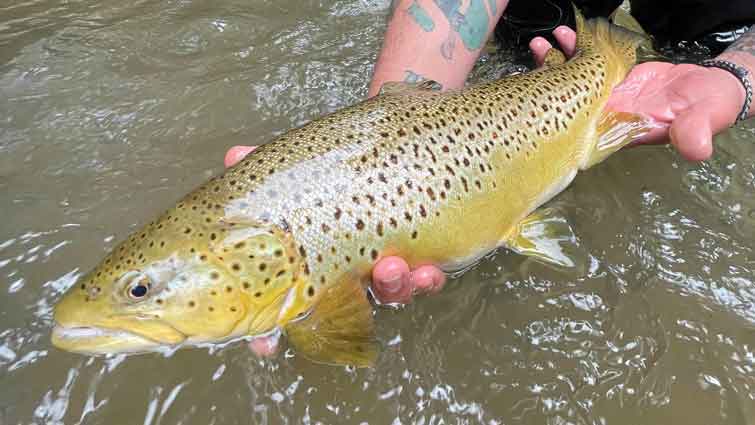
Trout also have a reason to feed efficiently. Winter is approaching, and some fish are preparing for spawning. Brown trout, in particular, can become more aggressive during the fall as they move toward spawning areas.

This does not mean trout suddenly stop eating small insects. Instead, larger food sources can become increasingly attractive because they offer more calories for the effort required to capture them. That shift is central to understanding fall trout feeding behavior.
A trout holding in a current seam does not necessarily want to chase every piece of food that passes. But a substantial stonefly nymph or October caddis may be worth moving for, particularly when the fly enters the fish's feeding lane naturally.
The Fall Temperature-to-Behavior Curve
Think of the seasonal transition as a gradual curve rather than a specific temperature trigger.
During warmer late-summer conditions, trout may concentrate around shade, deeper water, and oxygen-rich areas. As the water cools, fish can become more active and feeding opportunities may expand. Later in the season, increasingly cold water can slow activity again, making depth and presentation especially important.
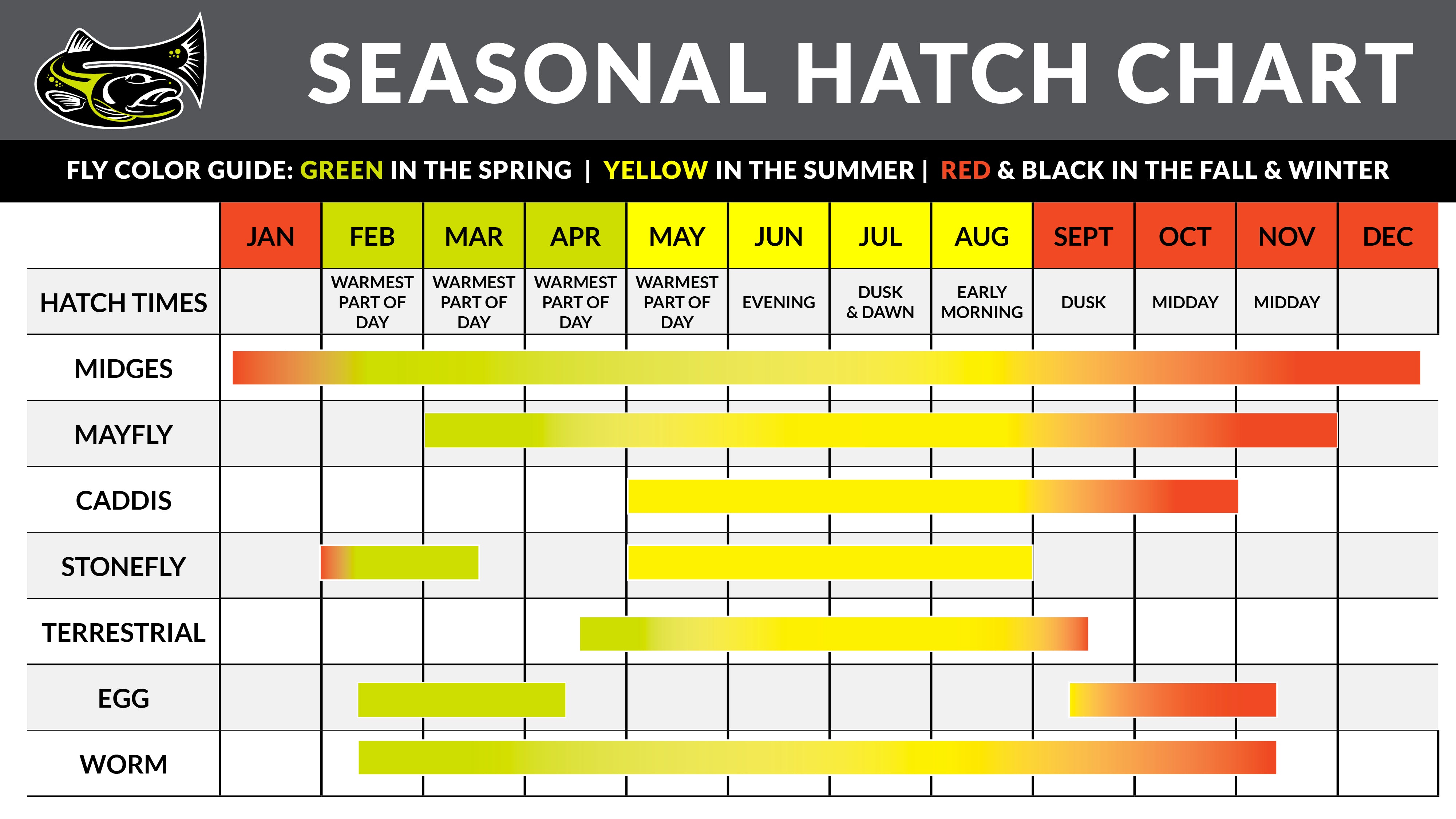
The exact temperature ranges vary by river, elevation, species, and local conditions, so there is no single number that tells you when to switch flies. Instead, watch the combination of water temperature, insect activity, trout location, and feeding behavior. That information is much more useful than following the calendar alone.

When and Where Larger Nymphs Shine
Larger nymphs become especially useful when the river contains larger insects and trout are holding in areas where those insects naturally travel. Deeper runs, current seams, rocky bottoms, undercut edges, and structure can all become productive.
The key is finding the intersection between food and comfortable holding water. A large nymph is most effective when trout can intercept it without having to spend excessive energy chasing it.
Deeper Runs
Deeper runs can become important as fall progresses because they provide security and consistent current.
A large stonefly nymph drifting near the bottom can look like an easy meal. Rather than immediately fishing the strongest part of the current, look for softer water along the inside edge or beside a seam.
This is where big nymphs for fall trout can become especially effective. The trout can remain in relatively comfortable holding water while larger food is delivered from faster current.
Edge Seams
Current seams create another productive fall feeding lane. The boundary between fast and slow water gives trout access to food without requiring them to fight the strongest current. Nymphs moving downstream can naturally spill into these edges.
A larger pattern presented along the seam can therefore imitate a substantial food item arriving in an easy-to-intercept lane. Pay close attention to how your fly enters the seam. A good cast that places the fly in the wrong current speed can still produce an unnatural drift.

Pre-Spawn Brown Trout
Fall brown trout deserve special attention because their behavior can change as spawning approaches. Mature browns may become more territorial and move toward suitable spawning habitat. Their willingness to chase or attack larger offerings can increase during this period.
Larger stonefly and caddis patterns and streamers can be useful when targeting actively feeding, non-spawning browns. Always follow local regulations and avoid disturbing active spawning fish or walking through redds. Protecting spawning habitat is part of being a responsible angler.
Two Real Examples of the Fall Size Shift
Imagine a river where you spent August catching trout on size #18 mayfly nymphs. By October, you begin seeing larger insects around the river and find trout holding along deeper seams.
Instead of continuing to use the same tiny patterns, move gradually toward a size #12–14 mayfly or caddis imitation. That is a practical size shift.
Now imagine a rocky freestone stream with a healthy stonefly population. During summer, smaller nymphs produce consistently. As fall arrives, you turn over rocks and find noticeably larger stonefly nymphs. A size #8–10 stonefly pattern now makes more sense.
The important lesson is not simply to “fish bigger in fall.” The goal is to match your fly to the food that trout actually have available.

Core Fall Nymph Patterns That Work Consistently
A productive fall box does not need to contain dozens of different patterns. A few dependable fly families can cover most seasonal situations.
Stoneflies provide a large, substantial profile. October caddis imitate another important fall food source. Larger mayfly nymphs provide a versatile option when trout are feeding on moderate-sized insects.
Together, these patterns create a strong foundation for autumn fly selection.
Stoneflies: Big Profiles
Stoneflies are among the most useful large nymph patterns to carry during the fall. Patterns such as Pat's Rubber Legs, Kaufmann's Stone, and other rubber-leg stonefly variations provide the bulky profile that trout can recognize in deeper water.
Sizes around #6–10 provide a useful range, although the correct size should always be based on the natural insects present in your river. Black, brown, golden brown, and dark olive are dependable color choices.
If stoneflies are active in your river, the Stonefly Life Cycle 32-Pack gives you multiple patterns for matching different stages of the stonefly life cycle.
Darker colors can create a strong silhouette in deeper or slightly stained water, while golden or brown tones can work well when they better match local stoneflies.
The appeal of a large stonefly is not just its size. Legs, body segmentation, and movement can create the impression of a substantial insect being carried through the current. That combination can trigger an aggressive response.

October Caddis Nymphs
If October caddis are in your region, they can provide another excellent reason to increase fly size in the fall.
These large caddisflies can become an important food source as the season progresses. Their substantial profile makes them particularly useful when smaller summer caddis patterns no longer represent the available food.
Look for patterns in orange, rust, tan, and brown. Sizes around #8–12 are a useful starting range. The goal is not necessarily to imitate every detail of the natural insect. Focus on the overall size, color, and profile.
If you find October caddis adults around the river or notice their cases along the bottom, consider making them a major part of your rotation.
Larger Mayfly Nymphs
Not every fall trout wants a giant stonefly. Larger mayfly nymphs in sizes #10–14 can provide an excellent middle ground.
Larger Pheasant Tail, Hare's Ear, and other mayfly nymph patterns can imitate the insects trout continue to feed on as water temperatures cool.
Olive, brown, tan, and natural colors are useful starting points. If trout appear selective, do not automatically jump from a size #18 nymph to a size #8 stonefly. Try increasing size gradually. A size #14 mayfly can represent a significant increase in food size while remaining appropriate for fish that are still keyed on mayflies.

Why Bigger Profiles Can Trigger Aggression
A larger food item can offer more energy than a tiny food item. For a trout, the question is whether the energy gained is worth the energy spent capturing the food.
A large nymph drifting naturally through a feeding lane can make that calculation easy. The trout does not need to chase it across the river. The current delivers the food directly to the fish. That helps explain why big nymphs work in fall.
The larger profile can look like a worthwhile meal, particularly when trout are actively feeding and the presentation remains natural. But size alone does not create a successful presentation.
A giant fly dragged unnaturally through the current can be far less effective than a smaller fly drifting correctly. Fly size, depth, speed, and presentation must work together.

Presentation Adjustments for Larger Nymphs
Moving to larger nymphs often requires more than simply changing flies. You may need to adjust your weight, leader length, casting angle, and drift speed.
A larger nymph may sink differently from the small patterns you used during summer. If trout are holding near the bottom, you need to make sure the fly actually reaches that depth.
At the same time, excessive weight can cause the fly to snag constantly or create an unnatural presentation. The goal is controlled depth. I will typically start with 2 size BB splitshot as a starting point and add or subtract from there.
Fish Slightly Deeper
If trout are holding near the bottom, your larger nymph needs to reach them. This may require additional weight or a different rig with a longer leader. If you need help choosing the right setup, check out our guide to nymphing rigs for fly fishing, including indicator, two-fly, and dropper setups.
Do not assume that simply fishing a heavier fly automatically solves the problem. Watch your drift and look for signs that your fly is reaching the correct zone.
Occasional bottom contact can be useful, but constant snagging usually means something needs to change.

The “Inner Seam, Slow Lead” Drift
Imagine a deep run with a strong center current and a softer inside seam. Instead of casting directly into the fastest water, position yourself so you can reach the inner edge of the seam.
Cast slightly upstream and allow the larger nymph to sink as it approaches the slower water. Your goal is to have the fly enter the feeding zone at approximately the same time it reaches the seam.
Maintain controlled contact without pulling the nymph unnaturally. This “inner seam, slow lead” presentation can be particularly effective when trout are holding near the bottom and using softer water to conserve energy.

Controlled Contact With Larger Nymphs
Larger nymphs often benefit from controlled contact. You want enough connection to detect a subtle take, but not so much tension that you drag the fly unnaturally.
Pay attention to unexpected stops, hesitations, or changes in line movement. A sudden stop of your indicator or line can mean your nymph has contacted bottom. It can also mean a trout has eaten. The more consistent your drift becomes, the easier it is to recognize the difference.
Mistakes Anglers Make During the Fall Size Shift
The transition to larger fall patterns can create several common mistakes. The first can be staying too small. If the river contains large stoneflies or October caddis and you continue fishing tiny summer patterns exclusively, you may be ignoring an important food source.
The second is fishing too shallow. A larger nymph does not help if it never reaches the depth where trout are holding.
The third is failing to adjust weight. Changing from a size #18 nymph to a size #8 stonefly changes how the entire rig behaves. Your weight, leader, and casting angle may need to change with it.
Correction: Staying Too Small
If trout are feeding but your small patterns are producing limited results, increase size gradually. Try a size #14 mayfly or #12 caddis before immediately reaching for your largest stonefly. This gives you a controlled way to determine whether size is actually the issue.
Correction: Fishing Too Shallow
If you suspect trout are holding deeper, adjust your rig. Increase leader depth or add an appropriate amount of weight. Then evaluate the drift rather than simply adding more weight repeatedly. As water continues to cool, depth becomes even more important. Our guide to how deep to fish nymphs in winter breaks down indicator placement, weight, leader length, and depth adjustments.
Correction: Using Too Much Weight
If your fly constantly hangs up, you may be too heavy. Reduce weight or adjust your casting angle so the nymph enters the feeding lane more naturally. The objective is not to scrape the bottom on every cast. The objective is to spend enough time near the feeding zone without destroying the drift.

Fall Trout Metabolism Changes
Understanding fall trout metabolism changes helps explain why feeding patterns can become more noticeable during seasonal transitions. Trout are ectothermic, so water temperature strongly influences their metabolism and activity.
As water moves away from stressful summer temperatures and toward cooler conditions, trout may become more active and comfortable feeding.
At the same time, the availability of larger seasonal insects can increase the potential reward of moving for food. These factors can overlap to create a productive fall feeding period.
However, temperature should never be viewed in isolation. Water level, weather, insect activity, spawning behavior, sunlight, and river characteristics all influence how trout behave. Think of temperature as one signal among many.
Autumn Fly Selection Should Follow the Food
Effective autumn fly selection starts with observation.
Turn over rocks. Check the edges of the river. Look for caddis cases and stoneflies. Watch for adult insects around the surface.
If the available food is large, increase the size of your patterns. If the river still contains mostly small mayflies, stay smaller. This approach keeps your fly selection connected to what the trout actually see.
The goal is not to follow a rigid seasonal formula. The goal is to make the most believable food choice available.

Building a Fall Nymph Box
A practical fall box can be relatively compact. Carry several stonefly patterns in sizes #6–10, particularly in black, brown, and golden tones. Add October caddis patterns around #8–12 in orange, rust, tan, and brown.
Then carry larger mayfly nymphs in #10–14, with olive, brown, and natural colors providing useful coverage.
Keep a selection of smaller mayflies and midges available as well. Those smaller patterns become even more important as temperatures continue to drop, so it’s worth knowing the best winter nymphs for trout before the season fully changes.
Fall does not eliminate small food sources. It simply gives you another reason to experiment with larger profiles.
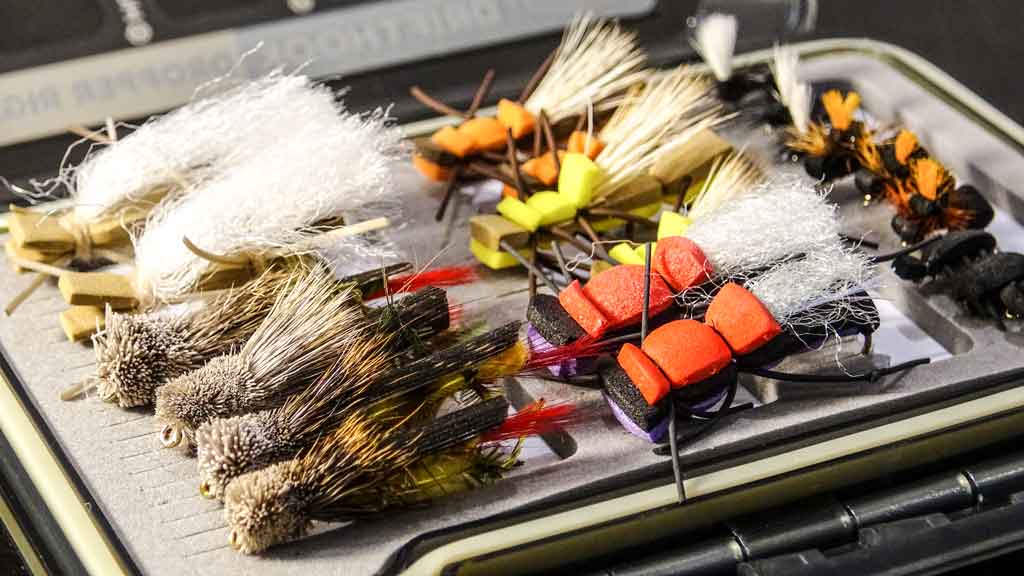
A Guide Nymphs Fly Fishing Flies Kit gives you a wider range of mayfly, caddis, midge, and stonefly patterns when trout are feeding selectively.
When to Make the Size Change
There is no exact day when trout suddenly switch to large nymphs. The transition happens gradually.
Look for cooling water, larger insects, deeper holding fish, increased feeding activity, and changing brown trout behavior.
When several of these signals appear at the same time, increase your fly size. Start by matching the food source. Then match its size. Then adjust your depth and presentation.
This is more effective than simply tying on the largest nymph you own because the calendar says it is fall.
Best Nymphs for Fall Trout
The best nymphs for fall trout are the patterns that combine the right size, profile, color, and presentation for the river you are fishing.
Large stoneflies are excellent when substantial stonefly nymphs are present. October caddis patterns become valuable when large caddis are available. Larger mayfly nymphs provide a versatile option when trout are still focused on mayflies but the food size has increased.
Do not abandon your smaller flies. Instead, expand your range. A successful fall angler learns to recognize when the trout's food supply has changed and adjusts accordingly.

The Fall Size Shift Is About More Than Size
The real lesson of fall nymphing is adaptation. The water is changing. The insects are changing. Trout are changing. Your fly box should change with them.
A larger nymph can give trout a more substantial meal, but only if it reaches the correct depth and drifts naturally through the feeding lane.
That means successful fall fly fishing nymph patterns depend on the entire presentation.
- Choose the right insect.
- Choose the right size.
- Reach the right depth.
- Control the drift.
- Then pay attention to how the trout respond.
When those pieces come together, fall can produce some of the most exciting nymph fishing of the year.

About the Author
This guide was written by Matthew Bernhardt, a Colorado-based angler with over 35 years of experience fishing Western rivers, including the Colorado, Arkansas, and Blue River. He founded and has owned Drifthook Fly Fishing since 2015.
Matthew has spent decades fishing through seasonal changes in trout behavior, water temperature, and insect activity. His focus is helping anglers choose the right nymphs, adjust depth and presentation, and make more effective decisions as river conditions change.