Fall changes the way brown trout use a river. As water temperatures cool, larger browns may become more active, move between holding areas, and prepare for spawning. Their behavior can become more territorial, but that does not mean every brown trout is automatically aggressive or willing to chase anything that moves.
Learning how to catch brown trout in fall is largely about understanding where these fish are likely to be, when they are most comfortable moving, and how to approach them without creating unnecessary disturbance. Structure, shade, current, and timing all work together to create high-percentage opportunities.

Understanding Fall Brown Trout Behavior
Fall brown trout behavior is influenced by several overlapping factors. Cooling water can create more favorable conditions for activity, while shorter days and changing temperatures signal the approach of spawning season. As spawning approaches, mature brown trout may move toward suitable spawning areas, and some fish may become more territorial.
Understanding fall pre-spawn trout behavior is more useful than assuming every brown trout will attack a large fly. Some fish may be actively feeding, while others may be moving between holding areas or preparing to spawn. Your job is to identify the fish that are actually available to the presentation you are making.
Trout may also become more willing to move toward larger food sources during fall. A substantial stonefly nymph, leech, or small streamer can represent a worthwhile meal. However, presentation still matters. A large fly moving unnaturally through the water is not automatically more attractive than a smaller fly presented correctly.
Key Structure Browns Prefer in Fall
Structure is central to successful brown trout structure fishing. A good piece of structure gives a trout protection from current and predators while still providing access to food. In fall, focus on places where comfortable holding water overlaps with productive feeding lanes.
Deep ledges, undercut banks, shade lines, boulder pockets, and drop-offs can all become important. Instead of trying to cover every piece of water, look for locations where a brown trout can conserve energy while still intercepting food.

Deep Ledges
Deep ledges can provide excellent holding water for fall browns. The deeper section gives the fish security, while the transition between shallow and deep water can create a natural feeding lane.
When fishing a ledge, do not focus only on the deepest point. Pay attention to the edge where faster and slower water meet. A brown may sit just outside the strongest current and move into the seam when food arrives.
A larger nymph drifted along the bottom can be particularly effective here, especially when stoneflies or other substantial insects are present.
Undercuts and Shade Lines
Undercut banks are classic brown trout habitat because they provide overhead protection while allowing fish to watch the current. During fall, low-angle sunlight can make shade especially valuable.
This is where brown trout shade lines become useful targets. The boundary between sunlight and shade can create a comfortable holding area, particularly when the surrounding water is relatively shallow.
Do not assume the trout is sitting directly underneath the darkest part of the bank. Look for the transition where shaded water meets current. That edge can become a natural feeding lane.

Boulder Pockets and Drop-Offs
Large boulders create current breaks, while drop-offs provide quick access to deeper water. A brown trout may sit behind a boulder, beside it, or immediately downstream where the current slows.
These locations are classic brown trout ambush zones. A trout can remain concealed while watching food move through faster water.
Rather than casting directly at the boulder, think about the water surrounding it. The best feeding lane may be several feet to one side, where food naturally moves into the trout's field of view.
Where Browns Rest vs. Where They Feed
One of the most useful distinctions when fishing for fall browns is separating resting water from feeding water. A deep pocket behind a large rock may be an excellent place for a trout to rest, while the current seam beside that pocket may be where it feeds.
An undercut bank may provide security, while the shallow edge immediately outside the undercut delivers food. This distinction matters because you do not always want to place your fly directly where the trout is sitting.
Instead, determine where food is entering the fish's holding zone. Then present your fly through that lane. This is often the difference between simply locating a brown and actually catching one.

Where Brown Trout Hide in Fall
If you are wondering where brown trout hide in fall, start with protection and access. Look for deep water, undercuts, large rocks, shade, current seams, and drop-offs.
But also look for transitions. A trout does not need to sit in the deepest part of the river all day. It may move between deep holding water and a shallower feeding lane.
That means the transition between two habitats can be more important than either habitat by itself. A deep pool beside a shallow riffle is worth investigating, as is a shaded undercut next to faster current. Think in terms of movement rather than static locations.

Timing Your Approach for Maximum Activity
Knowing where to fish is only half the equation. Timing can determine whether a trout is willing to move and feed.
Fall often creates several useful windows throughout the day, particularly during low-light periods and when weather changes trigger activity. However, there is no universal clock that guarantees success.
Early Morning
Early morning can provide excellent low-light conditions. Reduced light can make trout feel more secure, particularly in clear water.
Very cold mornings, however, may not always produce immediate feeding activity. If overnight temperatures have dropped significantly, give the river time to warm before deciding that the fish are inactive.
Starting with deeper, slower water can be a good approach before adjusting as activity increases.
Late Afternoon
Late afternoon can provide another productive window. As the day warms the water slightly, trout may become more active.
This can be especially useful during cooler fall days when morning temperatures remain low. Watch the water rather than following a strict clock. If insect activity increases or trout begin moving into feeding lanes, that is a stronger signal than the time on your watch.
Storm Fronts
Changing weather can also influence feeding. Moderate cloud cover can reduce bright sunlight and make trout more comfortable moving.
However, strong wind, heavy rain, rapidly rising water, or unsafe wading conditions should always take priority over fishing opportunity. Weather is useful information, but it should never be a reason to take unnecessary risks.

When to Target Browns in Fall
If you are wondering when to target browns in fall, prioritize periods when trout have a reason to move and feed. Early morning low light can provide security, while late-afternoon warming can increase activity. Cloud cover may also encourage fish to leave heavy cover.
The period surrounding changing weather can be productive as well, but the best timing varies with water temperature, river conditions, elevation, and the stage of the season.
As spawning approaches, brown trout movement can increase. Anglers should pay close attention to local regulations and avoid targeting actively spawning fish or disturbing spawning areas.

Fly Choices That Trigger Browns
Fall gives you more options than simply throwing the largest streamer you can find. Larger nymphs, leeches, small streamers, and appropriately used egg patterns can all have a place in a fall brown trout box.
Your selection should reflect the river and the behavior of the fish rather than simply the season.

Large Stonefly Nymphs
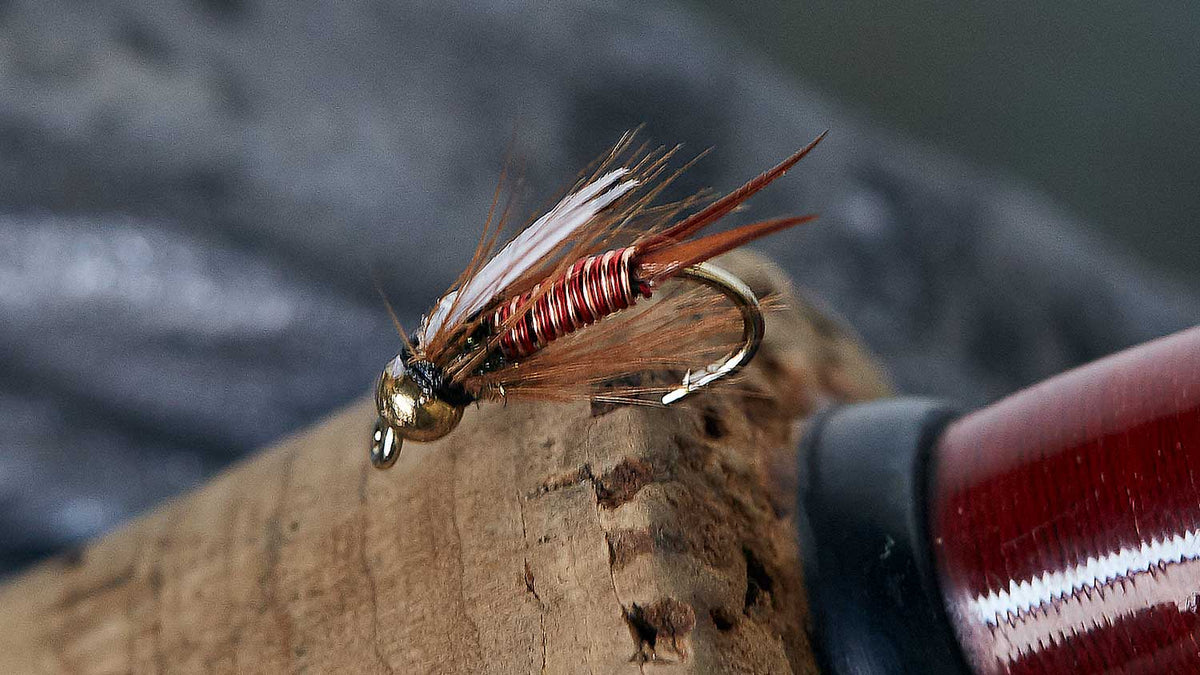
Large stoneflies are excellent choices when substantial stonefly nymphs are present. Patterns such as Pat's Rubber Legs and other large stonefly imitations can work around deep ledges, rocky structure, and current seams.
Our Stonefly Life Cycle 32-Pack gives you a range of stonefly patterns for fishing these deeper fall seams and structure.
Black, brown, olive, and golden tones provide useful variations. These patterns are particularly relevant following the fall size shift, when larger nymphs can become an increasingly important food source.

Caddis
Large caddis patterns can also be productive. Caddis nymphs provide a substantial profile and can be particularly useful when you find evidence of these insects along the river.
Orange, rust, tan, and brown are practical colors. Fish them around structure and deeper seams where trout can intercept them naturally.

Leeches
Leeches provide another large-profile option. A leech can imitate a substantial food source while creating movement that attracts attention.
Black, olive, brown, and dark rust are useful colors. Fish leeches along deeper banks, behind structure, and through slower edges where a brown can intercept them.

Streamers
Streamers can be useful when targeting larger, territorial browns. You do not necessarily need a huge articulated pattern. A compact streamer can imitate baitfish or other larger prey while remaining easier to cast and control.
If streamers are part of your fall game, the Streamer Surge Fly Fishing Flies Kit gives you a ready-to-fish selection for working banks, boulder pockets, and other brown trout ambush water.
Cast streamers toward structure rather than randomly through open water. Boulder pockets, deep banks, undercuts, and drop-offs are natural places to start.
Want to take that approach further? Our guide to streamer fishing for big trout breaks down how to use structure, depth, and retrieve to target larger fish.

Egg Patterns
Egg patterns can imitate an important seasonal food source, but their use requires care. If fishing around spawning activity, always follow local regulations and ethical guidelines. Do not target spawning fish or disturb redds simply to fish an egg pattern.
Where regulations and conditions make egg patterns appropriate, use them as part of a broader fall selection rather than assuming they are automatically the best choice.
Stealth, Angle, and Approach for Fall Browns
Large brown trout can be extremely sensitive to disturbance, particularly in clear, low-water conditions. Good fall brown trout tactics therefore begin before your first cast.
Walk slowly, keep your profile low, avoid unnecessary wading, and examine the water before stepping into it. Whenever possible, maintain enough distance that you can present the fly without standing directly over the trout.
Approach From Downstream
A downstream approach can allow you to stay behind the fish while keeping your profile concealed. This can work well when the current and bank structure allow you to move without creating excessive disturbance.
Move slowly and avoid walking through shallow water that connects directly to the trout's holding area.

Approach Along the Bank
A side approach can be useful when vegetation, rocks, or other cover are available. Instead of moving directly toward the trout, work along the edge while remaining behind natural obstacles.
This can provide a better casting angle while keeping you outside the fish's immediate field of view.
Approach From Across the River
If conditions and regulations allow, approaching from the opposite bank can provide an excellent presentation angle. You may be able to fish across the current while keeping your body farther away from the trout.
However, never wade simply to gain a better casting angle if doing so creates unnecessary risk or disturbs sensitive habitat. The safest effective position is usually the best one.
Low Profiles Matter
A large brown trout does not need to see your entire body to become alarmed. A sudden silhouette against the sky or bright movement along the bank can be enough.
Crouch when necessary and use vegetation as cover. Keep your movements deliberate. When you reach your casting position, stop moving and give the water time to settle before making your first cast.
This is particularly important when fishing brown trout shade lines in clear water.

Longer Leaders for Clear Fall Water
Clear fall water often rewards a longer leader. A longer leader can help separate the fly line from the fly and create a more natural presentation.
However, leader length should remain manageable. If the river is windy or heavily structured, an excessively long leader can create more problems than it solves.
Choose a leader and tippet combination that allows you to maintain control while minimizing unnecessary visibility. The goal is not simply to use the longest leader possible. It is to make the fly appear naturally while maintaining enough control to detect takes.
Fish the Ambush Zone, Not Just the Fish
When targeting a brown holding beside a boulder, do not automatically cast directly at the fish. Think about where the trout expects food to arrive.
If the current runs around the upstream side of the rock, food may enter from there. If a deep pocket sits below a riffle, food may be delivered from the faster water. If an undercut bank creates a shaded edge, food may drift along that boundary. These are the brown trout ambush zones worth targeting.
Your presentation should intersect the trout's feeding lane rather than simply landing on top of the fish. Learning to read current seams and feeding lanes will help you identify those high-percentage paths before you make your first cast.

Fall Brown Trout Tactics for Nymphs
When fishing a large nymph, focus on depth and drift before worrying about making long casts. If you need help dialing in your setup, our guide to nymphing rigs for fly fishing breaks down several ways to control depth and keep your flies in the feeding zone.
Cast upstream or upstream-and-across depending on the current. Allow the fly to sink while maintaining controlled contact. Watch your indicator or leader carefully for unexpected stops, hesitations, or changes in movement.
If the nymph repeatedly ticks bottom, adjust your weight or casting angle. If it never reaches the fish's depth, make the opposite adjustment.
The best brown trout structure fishing often happens close to the bottom because that is where larger nymphs naturally travel.
Fall Brown Trout Tactics for Streamers
Streamers create a different presentation. Instead of imitating a drifting insect, you are creating movement that can trigger a predatory or territorial response.
Cast toward structure and allow the streamer to move through the zone. Vary the retrieve speed and direction. Sometimes a slower presentation is more effective, while other times a change in direction can trigger a following fish.
Do not assume every brown wants a fast-moving streamer. Experiment with speed, depth, and direction while paying attention to how fish respond.

Know When to Leave a Fish Alone
Fall brown trout can be exciting to target, but not every fish should be pursued.
If you see a brown actively spawning or holding on a redd, leave it alone. Spawning fish are focused on reproduction, and disturbing them can damage both the fish and spawning habitat.
Instead, target fish that are actively feeding away from redds and spawning areas. This is both more ethical and often more productive.
A Practical Fall Brown Trout Strategy
Start by examining the river before you fish it. Find deep ledges, undercuts, boulder pockets, shade lines, and drop-offs. Then determine where trout can rest and where they can feed.
If the river contains large stoneflies or October caddis, begin with a larger nymph. If you see evidence of baitfish or aggressive behavior, consider a small streamer. If conditions support an appropriate egg presentation, keep egg patterns available while respecting spawning fish and local regulations.
Once you choose the fly, focus on your approach. Stay low, move slowly, choose the safest effective angle, and make the first cast count.
Structure Beats Random Water
One of the biggest mistakes anglers make when targeting fall browns is covering too much unproductive water.
You do not need to fish every square foot of the river. Instead, identify the highest-percentage structure.
A deep ledge with a feeding seam may be worth several careful casts. An undercut bank with shade may deserve a slow presentation. A boulder pocket with a drop-off may be an ideal place for a streamer.
This is why understanding where brown trout hide in fall is so important. Once you understand the relationship between cover, current, depth, and food, you can eliminate large amounts of water that are unlikely to hold fish.

Let Timing Complete the Strategy
Structure gives you the location. Timing gives you the opportunity. A productive piece of water during bright midday conditions may become much better during low light. A quiet run in the early morning may come alive as temperatures rise. A cloudy afternoon may encourage browns to move from cover into feeding lanes.
Pay attention to these transitions. When you combine structure with timing, you can improve your odds without simply making more casts.
The Fall Brown Trout Mindset
Learning how to catch brown trout in fall is not about forcing aggressive behavior from every fish. It is about understanding why a trout is using a particular piece of water. A brown holding behind a boulder has a reason for being there. A fish tucked beneath an undercut bank has a reason. A trout sitting along a shade line has a reason.
Your job is to understand that reason and present a fly where the fish expects food. Fall provides some of the year's most interesting opportunities because trout, insects, water temperatures, and seasonal movement all begin to change at the same time.
But the most successful anglers do not simply fish harder. They observe more carefully, choose better water, approach more quietly, and make more deliberate presentations. When browns get territorial, presentation matters.

About the Author
This guide was written by Matthew Bernhardt, a Colorado-based angler with more than 35 years of experience fly fishing Western rivers. He is the founder and owner of Drifthook Fly Fishing, which he has operated since 2015.
Matthew focuses on helping anglers better understand trout behavior, river structure, seasonal changes, and presentation so they can make smarter decisions on the water.